
Forearm and grip tension in tennis players
Forearm tension in tennis comes from grip pressure held across a whole match plus the impact of the ball through the strings. Easing the grip, checking grip size and string tension, and building playing hours gradually are the practical levers. Pain concentrated at one point on the outside of the elbow is a recognised condition and deserves professional assessment.
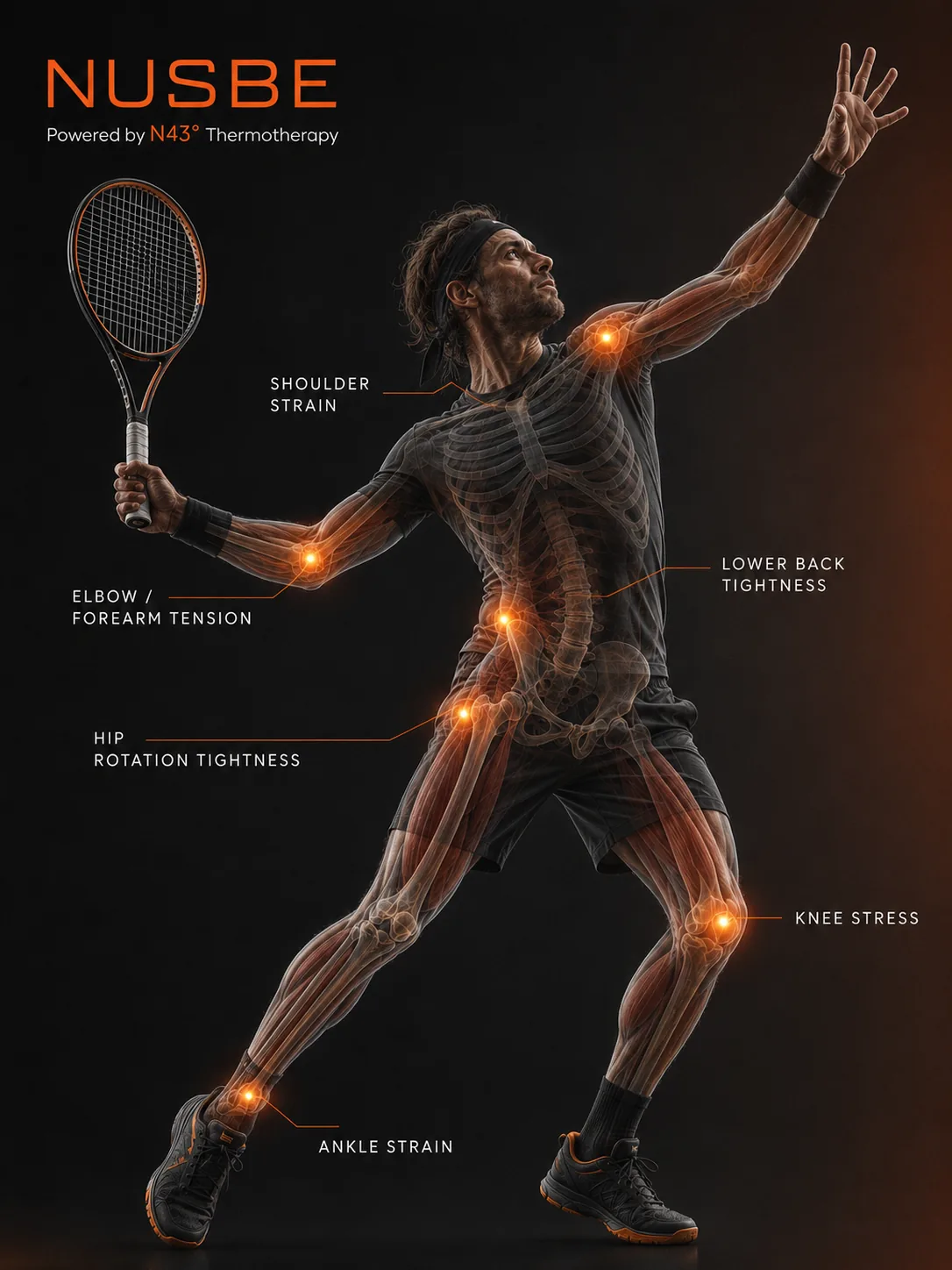
Where the load comes from
Two things load the forearm in tennis, and only one of them is obvious.
Ball impact. Every shot sends force back up through the strings, the frame and the grip into the forearm. Off-centre contact sends more.
Grip pressure. This is the one players underestimate. Holding the racquet tighter than the shot needs, for two hours, is continuous low-level work for the same muscles. Most players grip hardest when they are tense or tiring — exactly when the forearm can least afford it.
What tends to make it worse
- Gripping too tight, the most common and most fixable cause. - A sudden jump in playing hours after a quiet period. - Equipment that does not suit you — grip size, string tension, frame stiffness. - Playing through early forearm discomfort rather than easing off.
What supports recovery
- Ease the grip. A lighter hold genuinely reduces forearm load, and it does not cost you shot quality. - Get your setup reviewed. A coach or stringer can tell you more in ten minutes than a month of recovery routines will. - Build hours gradually. - Warmth for general tightness. With no acute swelling, controlled warmth may help ease tension along the forearm between sessions.
The line worth respecting
General forearm tightness is broad and eases with rest.
See a qualified healthcare professional if pain sits on one specific point on the outside of the elbow, if gripping everyday objects hurts, if it returns every session, or if it has been getting worse week on week. That pattern is well recognised, and playing through it is how a short problem becomes a long one.
Where NUSBE fits
A guided NUSBE session applies controlled, comfortable warmth to the forearm, shoulder and upper back at a consistent temperature and coverage.
This is recovery and comfort support. It is not a medical assessment, and it does not replace care from a qualified healthcare professional.
Frequently asked questions
What is tennis elbow?
Players use the term for pain concentrated at a specific point on the outside of the elbow. It is a recognised condition with established care pathways, and if it persists or returns every session it should be assessed by a healthcare professional rather than self-managed.
Is general forearm tightness the same thing?
No. General tightness is broad, spread along the forearm, and eases with rest between sessions. Pain that sits on one specific point and hurts when you grip everyday objects is different.
Does grip size or string tension matter?
Many players report a noticeable difference from grip size and string tension changes. A coach or a good stringer is better placed than a recovery routine to work out whether your setup is adding avoidable load.
Can warmth help?
For general forearm tightness with no acute swelling, warmth may help ease the tension between sessions. It does not address pain concentrated at one point on the elbow, which needs assessment.
Evidence referenced in this guide
- Wang Y et al., Physical Therapy in Sport 2021 — meta-analysis of 32 randomised trials on heat and cold for post-exercise muscle soreness.
- Network meta-analysis of cold and heat therapies for DOMS, 2022 — hot packs ranked highest for early soreness relief.
See the research behind our recovery claims on the science page.