
Knee pain after running: what it actually means
Knee pain after running is most often an overload signal — the joint and surrounding tissue were asked to do more than they were ready for — rather than lasting damage. A short reduction in training load usually settles it, and controlled warmth may help ease the stiffness while you adjust.
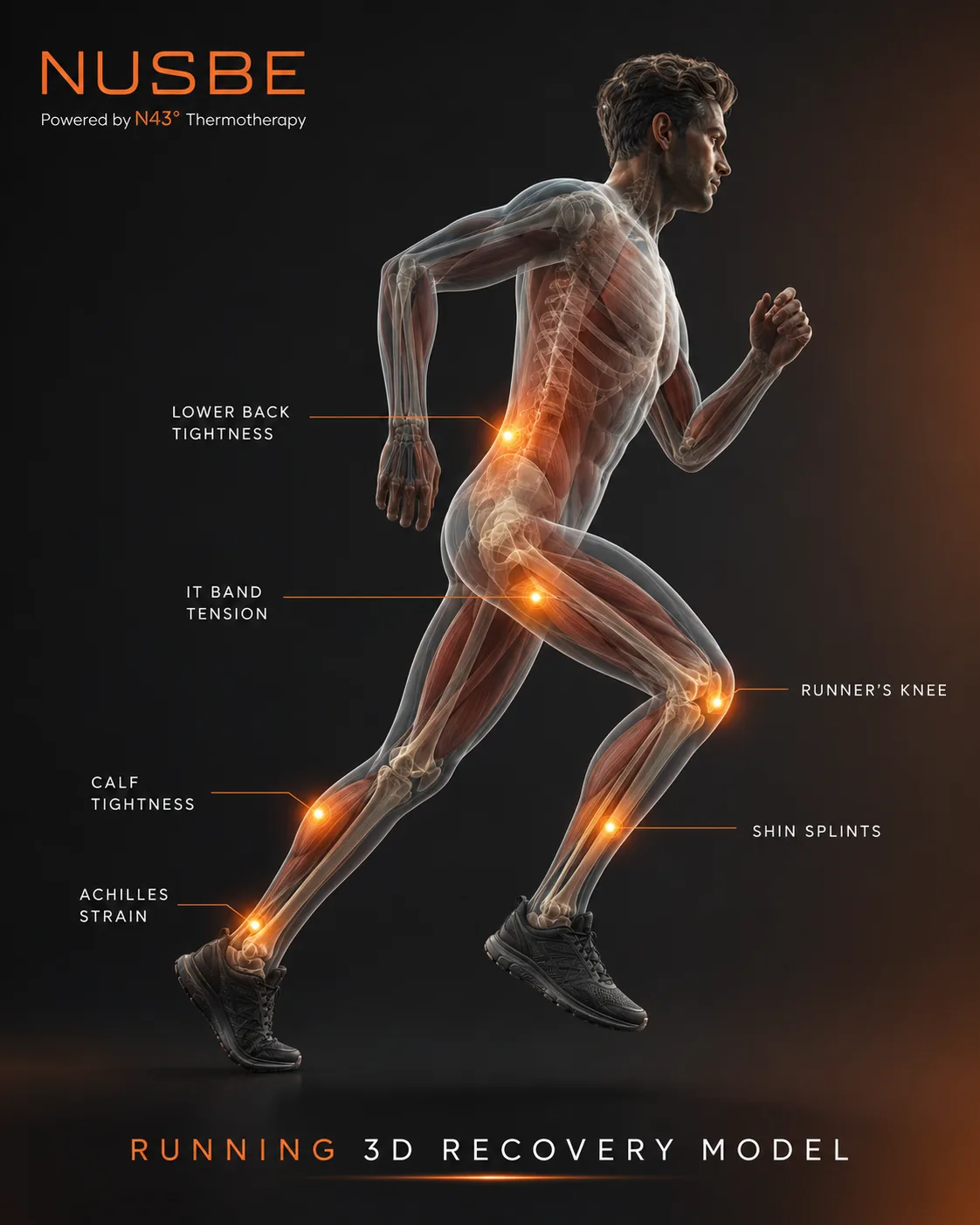
Why does my knee hurt after running?
Running loads the knee with several times your body weight, stride after stride. When training volume rises faster than the tissue adapts — a sudden mileage jump, a new hill block, worn shoes — the joint and the structures around it signal overload. That signal is discomfort, and in most runners it is not a sign of lasting damage.
The most common patterns are discomfort around or behind the kneecap during or after runs, and tightness along the outside of the knee. Both are strongly linked to training load, strength, and running volume changes rather than to any single dramatic injury.
What actually helps
- Adjust load first. A short period of reduced mileage or intensity is the most reliable first step. Most flare-ups settle when the load drops. - Keep moving gently. Complete rest is rarely needed; easy movement can support recovery better than immobility. - Warmth for stiffness. Once there is no acute swelling, controlled heat may help ease stiffness and support comfortable movement, and can make the area feel less guarded before gentle activity. - Strength work. Hip and thigh strength support the knee over time; a professional can guide a suitable programme.
Heat, ice, or neither?
| Situation | Sensible first choice |
|---|---|
| Fresh flare-up, warm or swollen knee | Ice, short applications |
| Stiff, tight, not swollen | Warmth |
| Persistent pain beyond two weeks | Professional assessment |
When discomfort is a red flag
See a doctor or physiotherapist promptly if the knee swells visibly, locks or gives way, hurts at rest or at night, or if pain persists despite two weeks of sensible load reduction. Those patterns deserve assessment, not self-care.
This guide is general wellness information for training recovery. It is not a diagnosis, and it does not replace assessment by a qualified professional.
Frequently asked questions
Should I stop running completely?
Usually not. Most running-related knee discomfort settles with a short reduction in mileage and intensity rather than full rest. If pain is sharp, worsening, or affects daily walking, see a professional first.
Is it better to use heat or ice on a sore knee?
Ice is generally preferred in the first day after a clear flare-up. Warmth suits stiffness and tightness once there is no acute swelling. Avoid heat on a hot, swollen joint.
When should I see a doctor or physiotherapist?
If the knee swells, locks, gives way, or the pain persists beyond a couple of weeks despite reduced training, get a professional assessment rather than self-managing.
Evidence referenced in this guide
- Cochrane review of superficial heat for low back pain, Spine 2006 — the model evidence base for heat and musculoskeletal discomfort.
- Heat and cold therapy for delayed-onset muscle soreness, Physical Therapy in Sport 2021 — meta-analysis of 32 randomised trials.
See the research behind our recovery claims on the science page.