
Calf tightness in runners: why it happens and what helps
Calf tightness in runners usually comes from the calf absorbing more load than it has adapted to — faster paces, hills, or higher mileage all shift work to the calf and Achilles. Gradual load progression is the fix, and warmth may help ease the tightness while the muscle adapts.
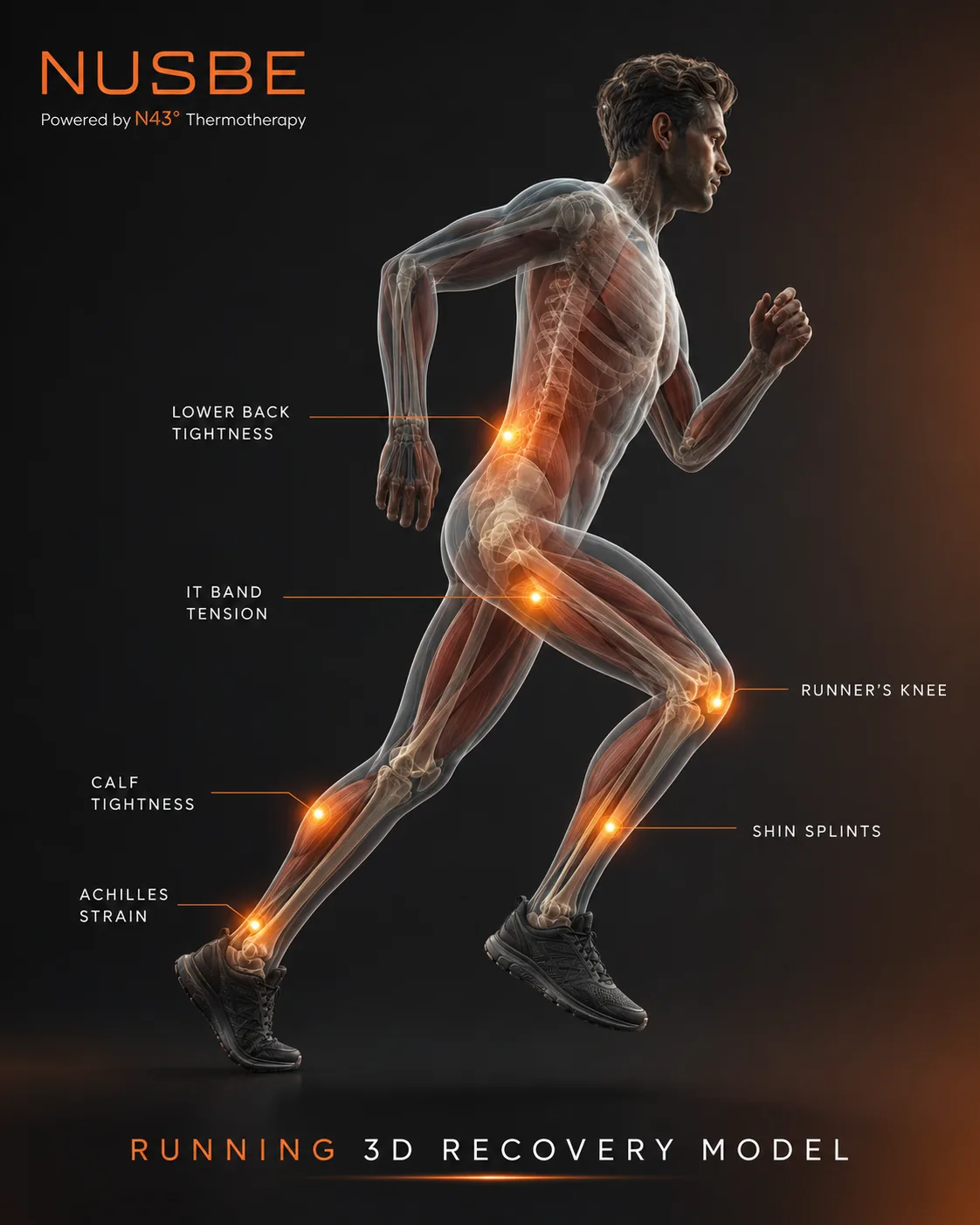
Why running tightens the calf
Every stride ends with the calf and Achilles controlling your landing and powering you forward. Change any ingredient — more mileage, more hills, faster intervals, harder surfaces, or a shift toward forefoot striking — and the calf suddenly does more work per kilometre than it has adapted to. The response is familiar: that tight, shortened, sometimes crampy feeling during or after runs.
For most runners this is an adaptation signal, not an injury. The calf is one of the most load-tolerant muscle groups in the body — it just wants the load to arrive gradually.
What helps tight calves
- Progress load gradually. The classic trigger is a sudden jump — new speed work, a hill block, or a mileage leap. Add distance gradually over several weeks rather than in one jump. - Warmth before movement. Controlled heat may ease stiffness and make the calf feel less guarded before easy runs or mobility work. - Gentle stretching and mobility. Eased into, calf stretches and slow heel raises can support the muscle's tolerance over time. - Look at footwear changes. A sudden switch to lower-drop shoes shifts load to the calf; transition over weeks, not days.
Tight, sore, or injured?
| What you feel | What it usually means |
|---|---|
| General tightness after harder runs | Normal load response |
| Next-day soreness that fades in 2–3 days | Ordinary muscle soreness |
| Sharp pull mid-run that stops you | Possible strain — get assessed |
| One-sided swelling, heat, or numbness | See a professional promptly |
When to get it checked
A sharp mid-run pain, tightness that worsens week after week despite easier training, or any swelling or numbness is beyond self-management. A professional can tell a loaded-but-healthy calf from a strain — and that distinction changes what you should do next.
This guide is general wellness information for training recovery. It is not a diagnosis, and it does not replace assessment by a qualified professional.
Frequently asked questions
Why do my calves get tight when I run faster?
Faster paces shift you toward the forefoot, which loads the calf and Achilles harder. Tightness after pace work is the calf telling you the load jumped.
Should I stretch tight calves?
Gentle stretching can feel good and may ease the sensation of tightness. Sudden aggressive stretching of a very tight calf is not the goal — warm the area and ease into it.
When is calf tightness a warning?
A sharp pull mid-run, one-sided swelling, or tightness with numbness deserves professional review. A sudden sharp calf pain that stops you running should be assessed before you return.
Evidence referenced in this guide
- Heat and cold therapy for delayed-onset muscle soreness, Physical Therapy in Sport 2021 — meta-analysis of 32 randomised trials.
- Reviews of therapeutic-heat mechanisms — heat increases connective-tissue extensibility and reduces muscle stiffness.
See the research behind our recovery claims on the science page.