
Sled pushes, wall balls and why your legs are wrecked
The sled push and wall balls concentrate load in the quads and glutes more than any other HYROX station, and they arrive on legs already fatigued from running. Spacing heavy station work, building sled volume gradually and warmth on stiff quads are the practical levers.
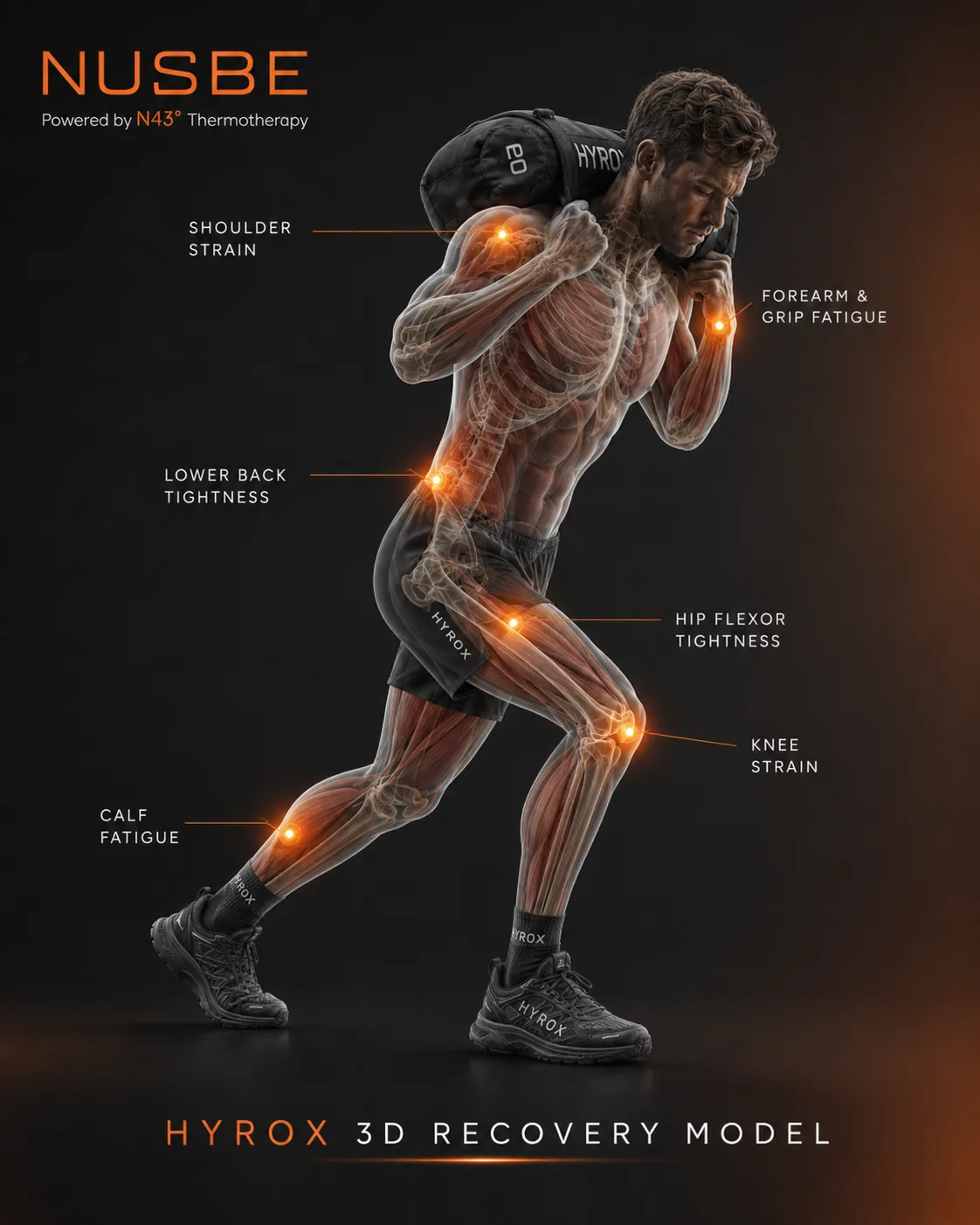
Two stations, most of the soreness
Eight stations, eight kilometres of running, and yet the soreness you feel two days later is mostly attributable to two of them.
The sled push. Sustained near-maximal effort through the quads and glutes, performed while already breathing hard from a run. Very little else in general training combines that much leg output with that much pre-existing fatigue.
Wall balls. A full squat, repeated around a hundred times, positioned near the end when the legs have nothing left. The movement itself is not complicated — the timing is what makes it punishing.
Where it lands
- Quads. The dominant area, from both stations.
- Glutes. Sled push in particular.
- Lower back. Holding position under the sled and through repeated squats.
- Shoulders. Wall balls, on top of everything else the upper body does.
What tends to make it worse
- Maximal sled pushes every session rather than building volume gradually.
- Training stations and running hard on the same day, repeatedly.
- Practising wall balls fresh, so race-day fatigue is never rehearsed.
- No genuinely easy day in the week.
What supports recovery
- Build sled volume gradually. This is the highest-return change for most athletes. - Separate your hardest station work from your hardest running. - Keep one day genuinely easy. - Refuel and rehydrate promptly, especially in Malaysian gym conditions where fluid loss is higher than most athletes assume. - Warmth for stiffness. With no acute swelling, controlled warmth may help ease stiffness in the quads and glutes between sessions.
When to get it looked at
See a qualified healthcare professional if knee or back pain is sharp rather than a general ache, if it concentrates in one specific point, or if it returns in exactly the same place every week.
Where NUSBE fits
A guided NUSBE session applies controlled, comfortable warmth to the quads, glutes and lower back at a consistent temperature and coverage.
This is recovery and comfort support. It is not treatment, and it does not replace care from a qualified healthcare professional.
Frequently asked questions
Why do sled pushes leave me so sore?
A heavy sled asks the quads and glutes for sustained maximal effort while you are already breathing hard from a run. Few gym movements combine that much leg load with that much fatigue.
Why are wall balls so hard in a race?
They come near the end, on legs that have already done seven other stations and several kilometres of running, and they are a full squat repeated a hundred times. The movement is simple; the timing is brutal.
How often should I train the sled?
Building sled volume gradually rather than doing maximal pushes every session is the pattern that keeps quad soreness manageable. A coach can shape frequency around your race timeline.
Does warmth help between sessions?
With no acute swelling, warmth may help ease stiffness in the quads and glutes. Research found heat applied within about an hour of finishing may reduce next-day soreness.
Evidence referenced in this guide
- Wang Y et al., Physical Therapy in Sport 2021 — meta-analysis of 32 randomised trials on heat and cold for post-exercise muscle soreness.
- Network meta-analysis of cold and heat therapies for DOMS, 2022 — hot packs ranked highest for early soreness relief.
See the research behind our recovery claims on the science page.