
HYROX race week and the days after
Race week is about arriving fresh rather than fitter: reduce volume, keep some intensity, protect sleep and do not test yourself. Afterwards, expect soreness to peak a day or two later, take several days of easy movement, and return to structured training gradually.
Race week cannot make you fitter
It can make you tired. That is the whole principle behind the week before a race, and it is the one most age-group athletes get wrong by trying to reassure themselves with one last hard session.
| Day | Shape |
|---|---|
| Early week | Reduced volume, keep some short sharp work |
| Mid week | Easy movement; rehearse transitions, not maximal efforts |
| Day before | Very light or off; sleep is the priority |
| Race day | Warm up properly, especially shoulders and hips |
Do not test yourself in race week. If the fitness is there, it is there.
The days after
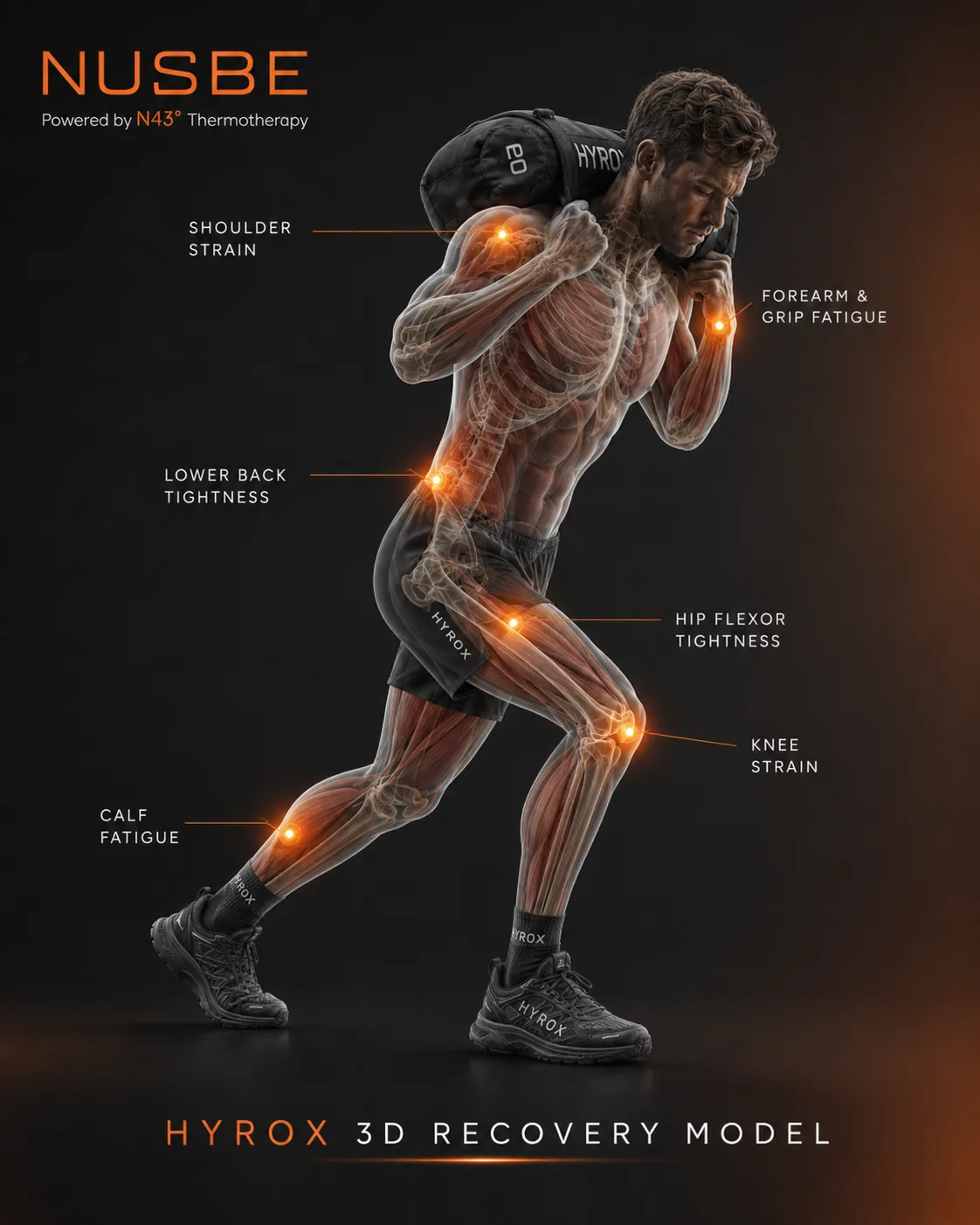
Soreness peaks roughly a day or two after the race, and quads and shoulders are usually the worst of it.
- First hour: rehydrate steadily, eat, keep moving gently before you sit. Research suggests warmth applied within about an hour of finishing may reduce next-day soreness. - Days 1–3: walking and very easy movement only. - Days 4–7: easy sessions if you feel like it, nothing structured. - Week two: rebuild structure gradually.
Athletes who return to a full programme immediately are usually the ones who spend the following month feeling flat, and it is easily avoided.
In Malaysian conditions
Local races and gym environments add heat and humidity to everything above. Fluid loss over a full race is higher than most athletes assume, and under-drinking is the most common reason the following two days feel worse than expected.
The line that is medical
Seek medical attention if you feel genuinely unwell rather than tired, if you have persistent swelling, very dark urine, ongoing dizziness or a fever. That is not a recovery question.
Where NUSBE fits
A guided NUSBE session applies controlled, comfortable warmth to the quads, shoulders and lower back at a consistent temperature and coverage. Athletes commonly book it in the days after a race, when the aim is simply to feel less stiff.
This is recovery and comfort support. It is not treatment, and it does not replace care from a qualified healthcare professional.
Frequently asked questions
Should I train in race week?
Most athletes do best reducing volume while keeping some short, sharp work so they do not feel flat. The week before a race cannot make you fitter, but it can leave you tired.
How sore should I expect to be afterwards?
Quads and shoulders are usually the worst, peaking a day or two after the race rather than immediately. For most athletes it settles within several days.
How long before training normally again?
Several days of easy movement first, then a gradual return over one to two weeks. Athletes who resume structured training immediately often spend the following month feeling flat.
When is it medical rather than soreness?
If you feel unwell rather than tired, have persistent swelling, very dark urine, ongoing dizziness or a fever, seek medical attention rather than waiting it out.
Evidence referenced in this guide
- Wang Y et al., Physical Therapy in Sport 2021 — meta-analysis of 32 randomised trials on heat and cold for post-exercise muscle soreness.
- Network meta-analysis of cold and heat therapies for DOMS, 2022 — hot packs ranked highest for early soreness relief.
See the research behind our recovery claims on the science page.