
HYROX recovery: how to bounce back between sessions
HYROX loads nearly everything — running economy, grip, shoulders, and the lower back — so soreness lands widely. The essentials are unglamorous: spacing hard sessions, sleep, and easy movement. Applied early after training, heat or cold may reduce next-day soreness, with warmth suiting the stiffness that follows sled and carry work.
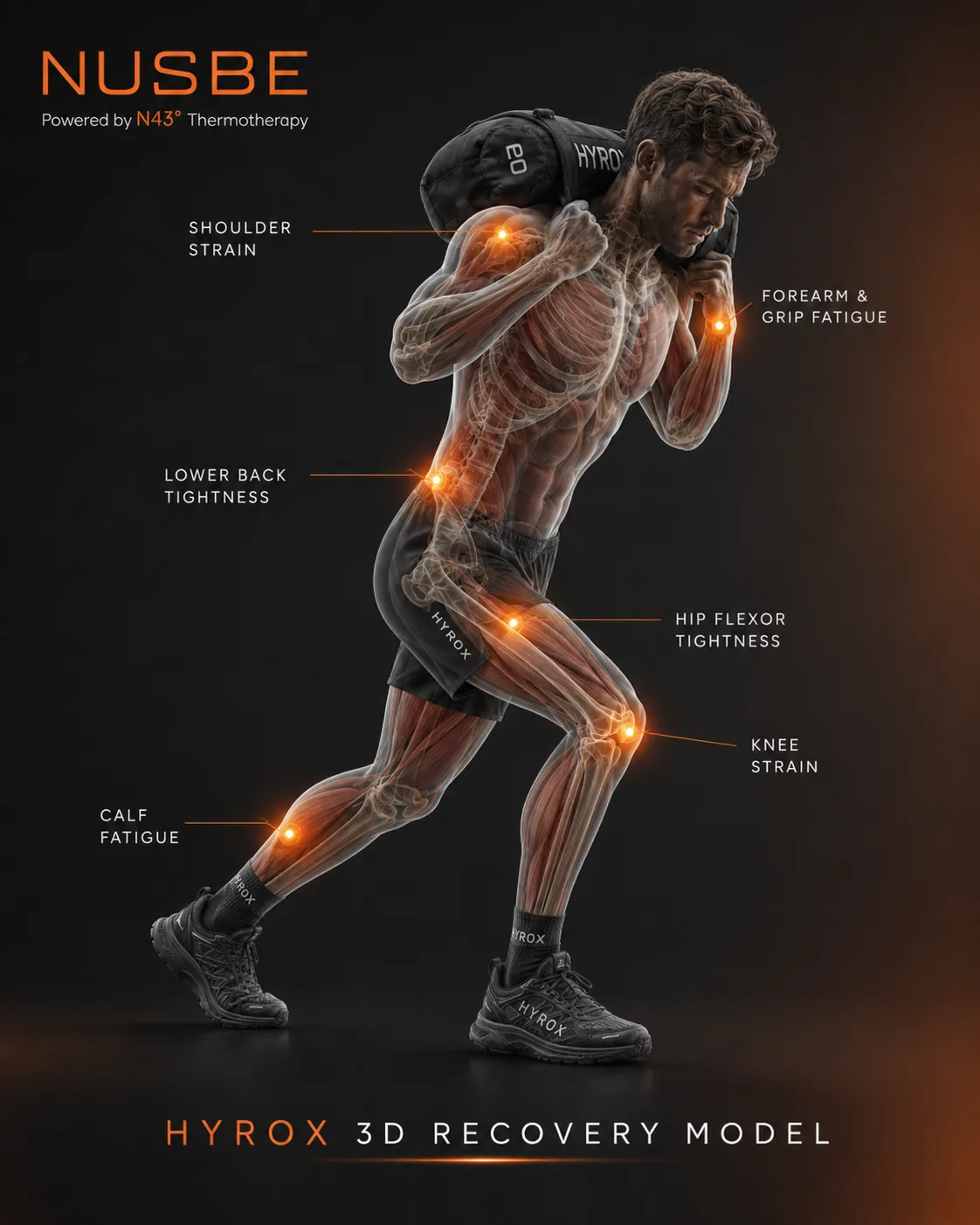
Why HYROX recovery is different
A HYROX session is two sports at once: running volume plus heavy functional strength — sleds, farmer's carries, sandbag lunges, wall balls. That combination spreads load across the calves and knees (running), the grip and forearms (carries), the shoulders (wall balls), and the lower back (nearly everything). It is normal for soreness to land in several places at once, which is exactly why recovery deserves a plan rather than an afterthought.
The recovery basics that actually move the needle
- Space the hard days. Two to three genuinely hard mixed sessions a week, separated by easy aerobic work, beats four hard days stacked together. - Sleep is the engine. No recovery tool compensates for chronically short sleep. Guard it like a training session. - Easy movement between sessions. Walking, easy spinning, or light mobility keeps blood moving without adding load. - Heat or cold, early. Applied within about an hour of finishing, either may reduce how sore you feel tomorrow. Warmth suits the stiff, guarded feeling after sled and carry work; cold suits the immediate aftermath of a maximal session.
A simple weekly shape
| Day | Session | Recovery focus |
|---|---|---|
| Mon | Hard mixed session | Heat or cold within the hour |
| Tue | Easy aerobic | Sleep, hydration |
| Wed | Strength emphasis | Warmth for stiffness |
| Thu | Rest or mobility | Easy movement |
| Fri | Hard mixed session | Heat or cold within the hour |
| Weekend | One long easy effort | Gentle stretching, warmth |
Grip, shoulders, lower back: the three hotspots
Grip fatigue from carries, shoulder load from wall balls, and lower-back tightness from nearly everything are the three most common HYROX complaints. All three usually respond to the same pattern: space the provoking sessions, keep moving gently, and use warmth to ease stiffness once there is no acute flare. Tightness that becomes sharp, one-sided, or persistent belongs with a professional, not a recovery routine.
This guide is general wellness information for training recovery. It is not a diagnosis, and it does not replace assessment by a qualified professional.
Frequently asked questions
Why am I sore in so many places after HYROX training?
The format combines running volume with sleds, carries, lunges and wall balls, so load lands on the legs, grip, shoulders and lower back in one session. Widespread soreness after hard sessions is expected, especially early on.
How many hard HYROX sessions a week is reasonable?
Most athletes recover well with two to three genuinely hard mixed sessions spaced through the week, with easy aerobic work between. Persistent heavy soreness is a sign the spacing, sleep, or load needs adjusting.
Does heat help after sled and carry work?
Warmth may ease the stiffness that follows heavy carries and sled pushes, and research on post-exercise soreness found heat applied within about an hour of training may reduce next-day soreness.
Evidence referenced in this guide
- Wang Y et al., Physical Therapy in Sport 2021 — meta-analysis of 32 randomised trials on heat and cold for post-exercise muscle soreness.
- Network meta-analysis of cold and heat therapies for DOMS, 2022 — hot packs ranked highest for early soreness relief.
See the research behind our recovery claims on the science page.