
Recovering between back-to-back hiking days
On back-to-back hiking days, full recovery is not realistic and the goal is arriving able to move. Rehydrate and eat soon after finishing, get out of boots, elevate the legs, protect sleep, and apply warmth to stiff quads and calves in the evening. Sharp knee pain or a swollen ankle means stopping, not managing through.
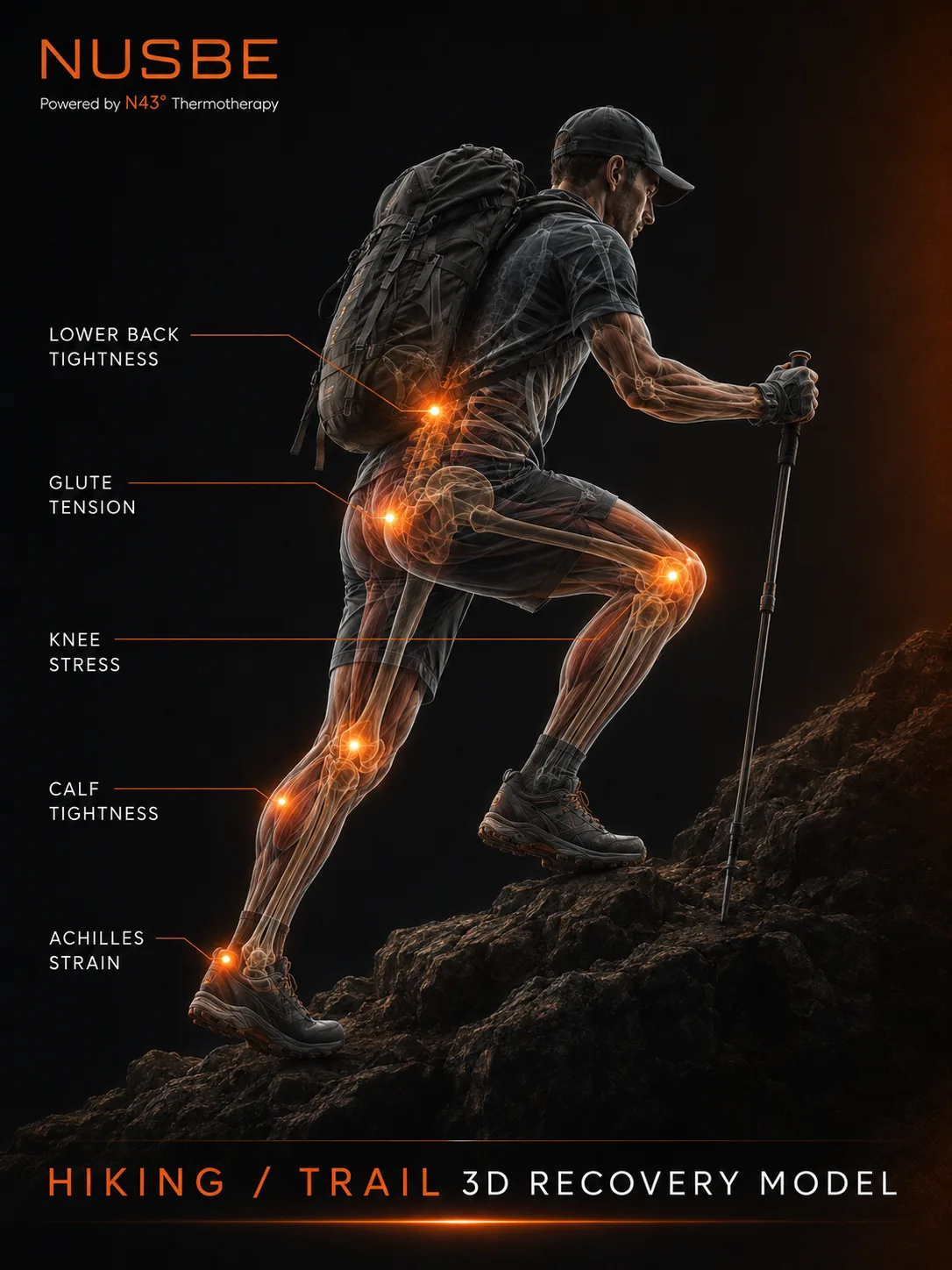
Day two is usually the hard one
Delayed soreness peaks roughly a day or two after effort. On a multi-day trek that timing is inconvenient: day two often feels worse than day one, and day three sometimes worse again.
This is normal, and knowing it in advance changes how you plan. Hikers who expect day two to feel fine tend to start too fast and pay for it on the descent.
The evening routine that helps most
| When | What to do |
|---|---|
| First 15 minutes | Out of boots, start rehydrating |
| First hour | Eat properly; warmth on stiff quads and calves if no swelling |
| That evening | Elevate the legs; gentle movement, not aggressive stretching |
| Before sleep | Protect sleep — the biggest lever available on a trek |
Research on post-exercise soreness suggests warmth applied within about an hour of finishing may reduce how sore you feel the next day, which is exactly the window you have at camp.
Pacing day one
The most effective thing you can do for day two happens on day one: **do not attack the first descent**. Hikers who take the first day's downhill hard, while feeling fresh, are the ones whose quads are unusable the next morning.
Poles, shorter steps and a slower descent on day one buy far more than any recovery routine at camp.
When to stop
Sharp knee pain on descent, a swollen or unstable ankle, an inability to weight-bear, or anything clearly worse in the morning than it was at night. Those deserve a healthcare professional's opinion — and on a trail, the sensible move is out, not on.
Where NUSBE fits
A guided NUSBE session applies controlled, comfortable warmth to the quads, calves and lower back at a consistent temperature and coverage. Hikers commonly book it after returning from a multi-day trip rather than during one.
This is recovery and comfort support. It is not treatment, and it does not replace care from a qualified healthcare professional.
Frequently asked questions
Will my quads recover overnight?
Not fully. Delayed soreness typically peaks a day or two after the effort, which means day two often feels worse than day one. Planning for that is more useful than hoping otherwise.
What is the most useful thing to do at camp?
Rehydrate and eat soon after finishing, get out of boots, and elevate your legs for a while. Those three cover most of what is available to you.
Should I stretch before bed?
Gentle range of movement is fine and many hikers find it comfortable. Aggressive stretching of already sore muscles tends not to help and can leave you feeling worse.
When should I turn back or stop?
Sharp knee pain on descent, a swollen or unstable ankle, or anything worse in the morning than it was at night. Those need professional assessment rather than another day on the trail.
Evidence referenced in this guide
- Wang Y et al., Physical Therapy in Sport 2021 — meta-analysis of 32 randomised trials on heat and cold for post-exercise muscle soreness.
- Network meta-analysis of cold and heat therapies for DOMS, 2022 — hot packs ranked highest for early soreness relief.
See the research behind our recovery claims on the science page.