
Feet, ankles and pack load on the trail
Feet and ankles take hours of uneven ground, and a pack adds load to the shoulders, upper back and lower back on every step. Fitting the pack properly, breaking in footwear, elevating the feet afterwards and warmth on stiff areas are the practical levers. Ankle swelling after a roll needs professional assessment.
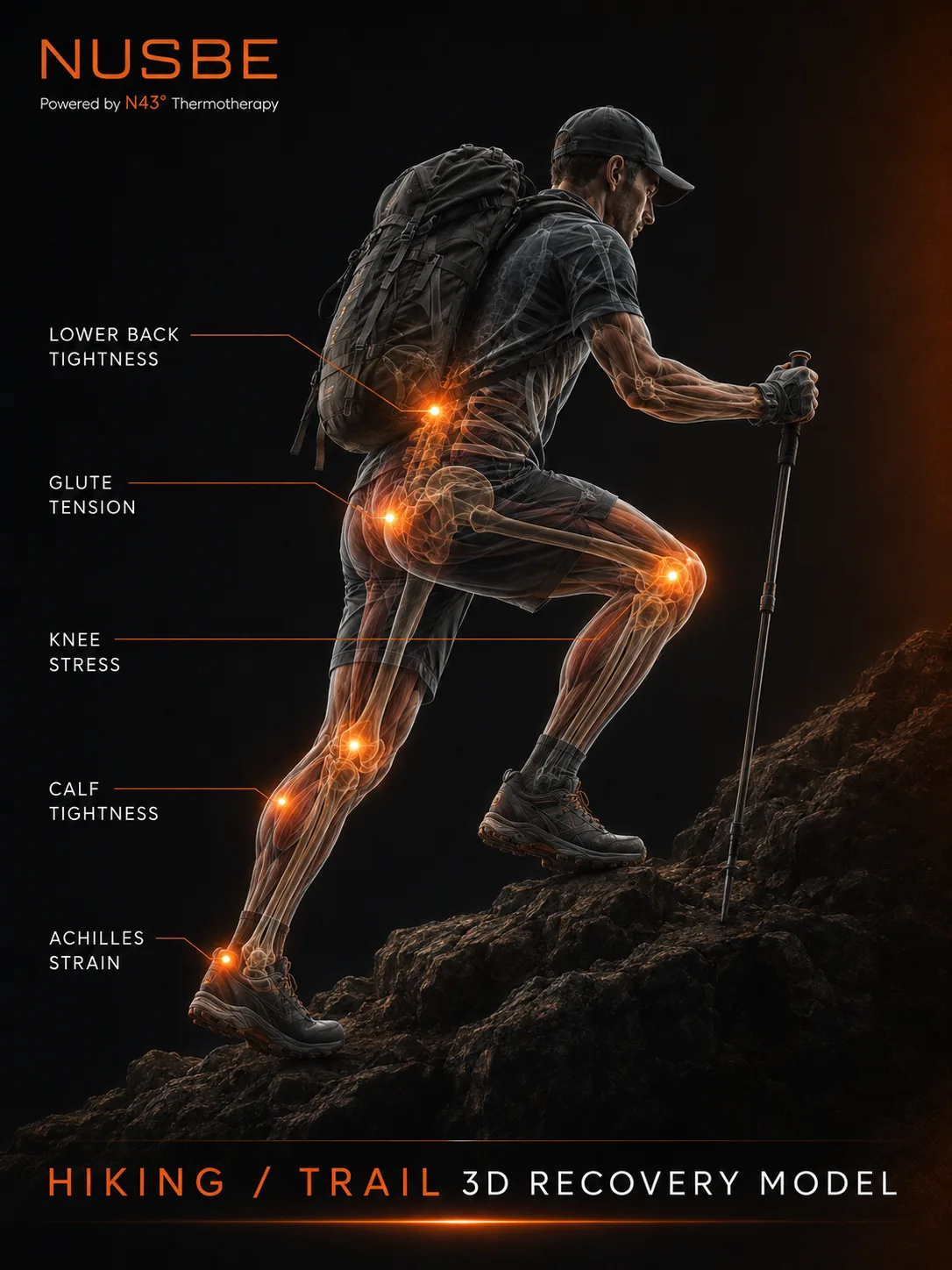
The parts nobody trains for
Everyone thinks about legs and lungs before a hike. Almost nobody thinks about their feet, their ankles or the pack — which is why those are so often the parts that ruin the day.
Feet and ankles work harder on a trail than the distance suggests. On a road walk the foot repeats the same stride. On a trail it adjusts to every rock, root and camber, and the small stabilising muscles do that for hours.
The pack compounds everything. Carried badly, it loads the shoulders, neck and lower back continuously — not in bursts, but for the entire day.
Pack fit, in one paragraph
Most of the weight should sit on your hips, not your shoulders. If your shoulders ache more than your legs after a day out, the hip belt was probably too loose. Tighten it so the belt carries the load and the shoulder straps mainly stabilise. It is the single highest-return adjustment in hiking.
Local conditions matter
Malaysian trails add heat and humidity to everything above. Two practical consequences:
- Water is the one thing not worth cutting from pack weight. - Feet stay wet, from sweat if not from streams, which makes blisters and hot spots far more likely than in a dry climate. Break footwear in properly, and deal with a hot spot the moment you feel it rather than at the summit.
Recovery that evening
| When | What to do |
|---|---|
| Straight after | Get out of boots; rehydrate seriously |
| First hour | Warmth on tight calves and shoulders, if no swelling |
| That evening | Elevate the feet; gentle ankle range of movement |
| Next day | Easy walking rather than complete rest |
When it is not just fatigue
See a qualified healthcare professional if you rolled an ankle and it swelled, if it feels unstable, if you cannot weight-bear, or if foot pain is sharp and concentrated in one spot rather than generally tired.
Where NUSBE fits
A guided NUSBE session applies controlled, comfortable warmth to the calves, lower back and shoulders at a consistent temperature and coverage.
This is recovery and comfort support. It is not treatment, and it does not replace care from a qualified healthcare professional.
Frequently asked questions
Why do my feet ache so much after hiking?
Hours of uneven ground means the foot is constantly adjusting, not just repeating a stride. Add boots, rock and root, and the small muscles of the foot do far more work than on a flat walk of the same distance.
How much should a day pack weigh?
Lighter is easier on the shoulders and lower back, and most hikers carry more than they use. Water in Malaysian humidity is the one thing not worth cutting.
Why do my shoulders hurt more than my legs sometimes?
Usually pack fit. A pack carried on the shoulders instead of the hips loads the upper back and neck for hours. Tightening the hip belt so it takes most of the weight changes it noticeably.
What helps my feet the evening after a hike?
Getting out of boots early, elevating the feet, gentle ankle movement, and warmth on tight calves once there is no swelling.
Evidence referenced in this guide
- Wang Y et al., Physical Therapy in Sport 2021 — meta-analysis of 32 randomised trials on heat and cold for post-exercise muscle soreness.
- Network meta-analysis of cold and heat therapies for DOMS, 2022 — hot packs ranked highest for early soreness relief.
See the research behind our recovery claims on the science page.