
Why you're sore after hiking, and how long it lasts
Hiking soreness concentrates in the quads, knees and calves, and most of it comes from going down rather than up. It typically peaks a day or two after the hike and settles within a few days. Rehydrating, easy movement, and warmth on stiff areas are the practical basics. Sharp knee pain or swelling deserves professional assessment.
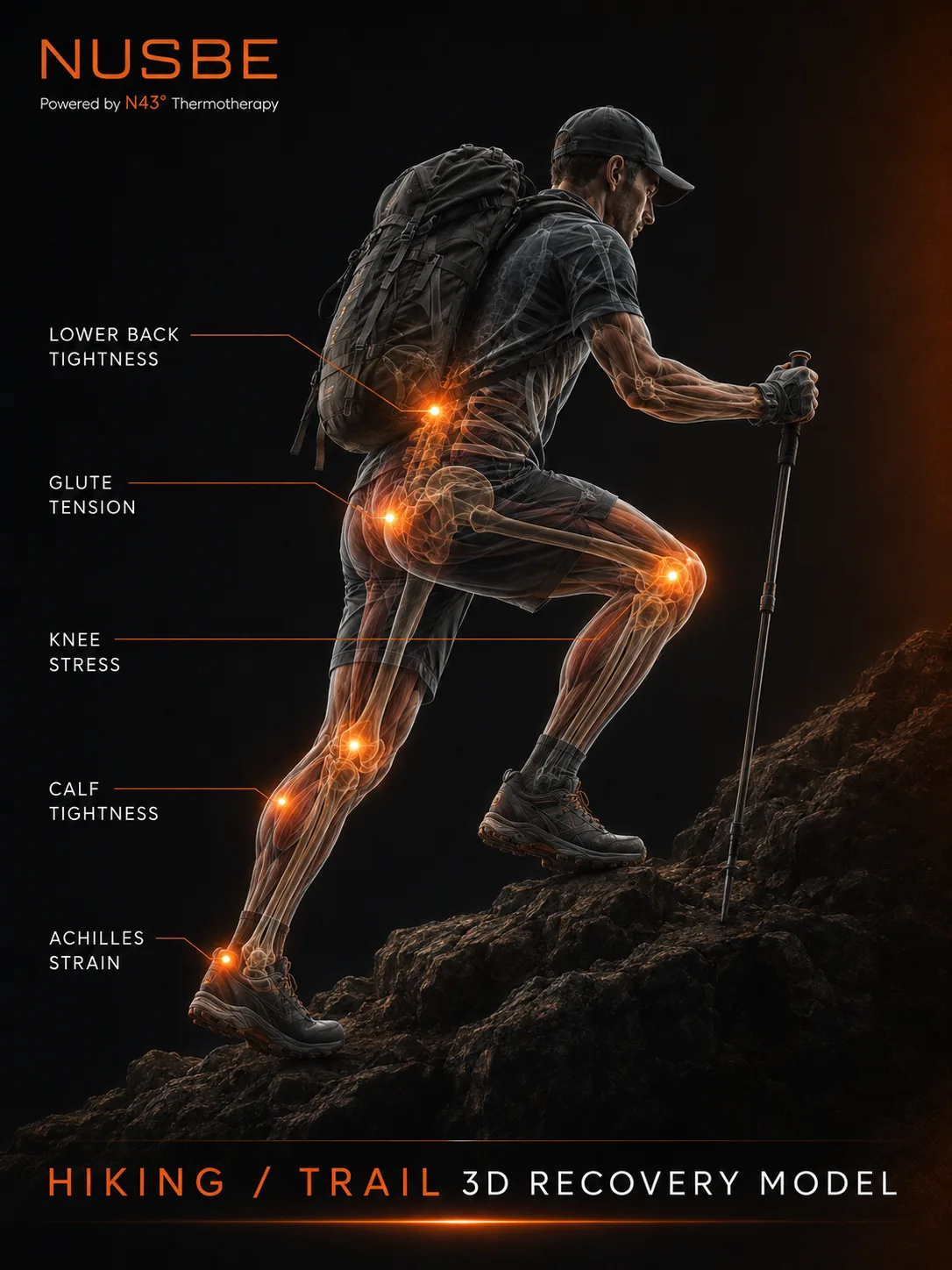
Going down is what makes you sore
Most hikers assume the climb is the hard part. Your lungs agree. Your quads disagree.
Climbing is demanding cardiovascularly, but descending is what produces the soreness you feel two mornings later. Every step down asks the quads to lengthen while holding your body weight — a pattern that reliably produces more delayed soreness than climbing the same slope.
This is why people who take the cable car up and walk down often feel worse than those who did it the other way round.
Where the load lands
- Quads. The descent, overwhelmingly.
- Knees. Repeated impact absorption on the way down.
- Calves and Achilles. The climb, and any steep or uneven ground.
- Feet. Hours in boots on rock and root.
- Shoulders and lower back. Only if you carried a pack.
How long it usually lasts
| What you feel | What it usually means |
|---|---|
| Quads sore going down stairs the next two days | Classic hiking soreness |
| General calf and foot fatigue | Typical |
| Sharp knee pain during descent | Worth professional assessment |
| Swelling, or an ankle that gave way | See a healthcare professional |
What actually helps
- Rehydrate properly. In Malaysian humidity most hikers finish well down on fluid, and it makes the next day feel worse. - Keep moving the next day. A walk beats sitting still — stairs will be unpleasant either way, but movement shortens it. - Use poles on steep descents if your knees complain. They genuinely reduce the load going down. - Build up gradually. Going from occasional walks straight to a full-day summit trail is the usual cause of soreness that lasts most of a week. - Warmth for stiffness. With no acute swelling, controlled warmth may help ease stiffness in the quads, calves and lower back.
Where NUSBE fits
A guided NUSBE session applies controlled, comfortable warmth to the quads, calves and lower back at a consistent temperature and coverage. Hikers commonly book it the day after a big trail.
This is recovery and comfort support. It is not treatment, and it does not replace care from a qualified healthcare professional.
Frequently asked questions
Why are my quads so sore after hiking?
Descending asks the quads to lengthen under load with every step to control your body weight down the slope. That pattern produces more next-day soreness than climbing does, which surprises most hikers.
Why does the day after feel worse than the hike itself?
Post-exercise soreness commonly peaks 24 to 48 hours afterwards rather than immediately. Hiking is a classic example because so much of the load is the kind that shows up late.
How long should hiking soreness last?
For most people it eases within two to four days. Sharp knee pain, swelling, or soreness still worsening after several days deserves assessment by a healthcare professional.
Does warmth help after a hike?
With no acute swelling, warmth may help ease stiffness in the quads, calves and lower back. Research on post-exercise soreness found heat applied within about an hour of finishing may reduce next-day soreness.
Evidence referenced in this guide
- Wang Y et al., Physical Therapy in Sport 2021 — meta-analysis of 32 randomised trials on heat and cold for post-exercise muscle soreness.
- Network meta-analysis of cold and heat therapies for DOMS, 2022 — hot packs ranked highest for early soreness relief.
See the research behind our recovery claims on the science page.