
Shoulder load and stroke volume in swimming
Shoulder discomfort in swimming tracks weekly stroke volume more closely than anything else. Building distance gradually, varying stroke, and reviewing technique are the levers that matter. Persistent shoulder pain in swimmers is a well-recognised condition with established care pathways and deserves professional assessment rather than another recovery routine.
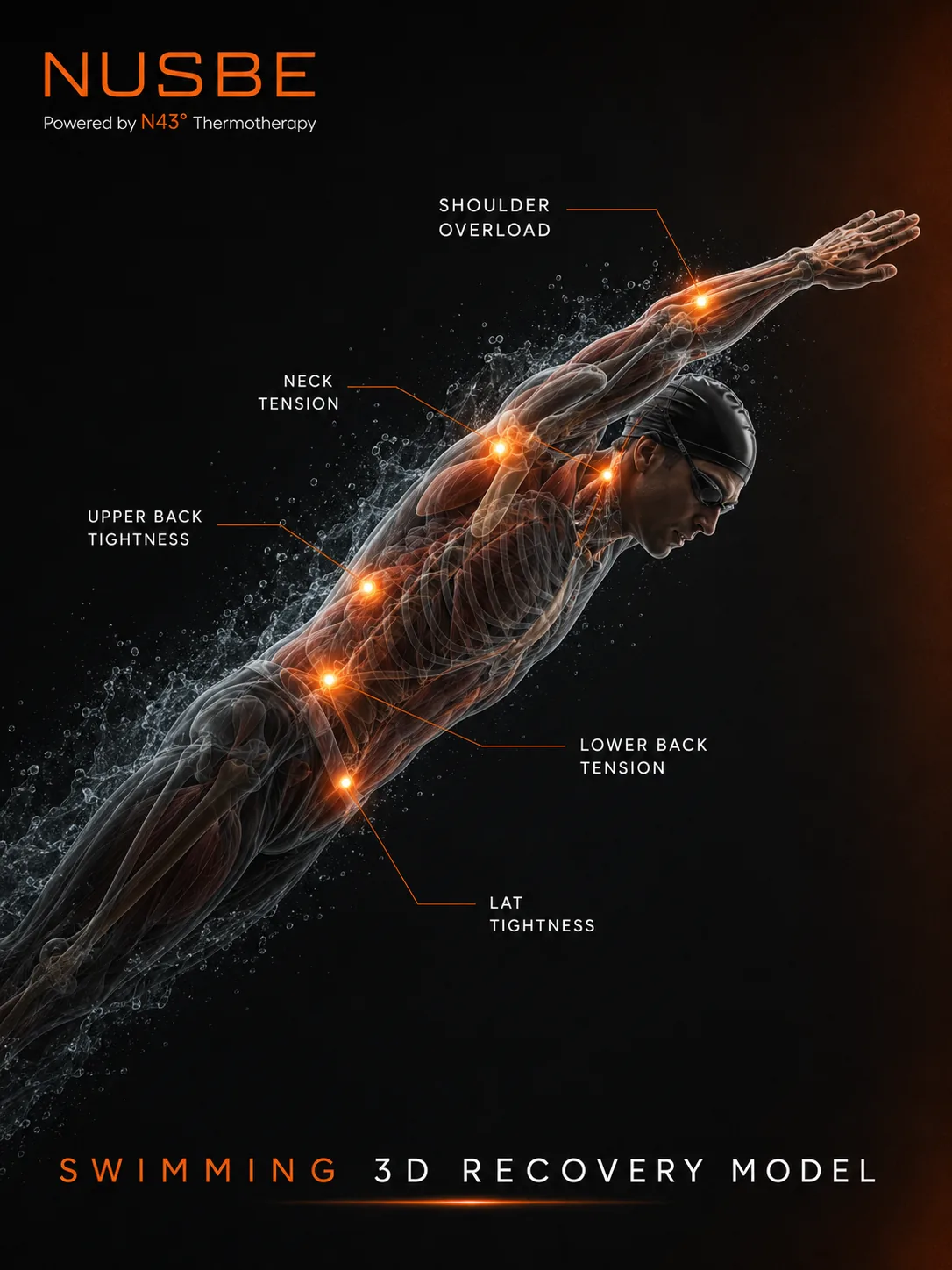
The repetition count is the story
Count the strokes in an hour of freestyle. Most adult swimmers land somewhere above a thousand per arm.
Now consider that every one of those goes through the same joint, in roughly the same path, with the shoulder producing power at the front and controlling the arm on recovery. No other sport asks a single joint for that many repetitions in a session.
This is why shoulder complaints in swimming correlate with weekly distance far more strongly than with speed, technique alone, or age.
What raises the load
- A sudden jump in weekly volume. The most common thread by far.
- Swimming only freestyle, so the same pattern repeats every session.
- Heavy paddle use added quickly rather than introduced gradually.
- Fatigue late in a session, when stroke mechanics quietly deteriorate.
- Starting a hard main set cold.
What supports recovery
- Add distance in small steps and hold there before adding more. - Mix strokes. Backstroke and breaststroke load differently and give the freestyle pattern a break. - Introduce paddles gradually if you use them at all. - Warm up properly before the main set. - Warmth for stiffness. With no acute swelling, controlled warmth may help ease tightness across the shoulder and upper back between sessions.
When to stop self-managing
See a qualified healthcare professional if there is a sharp catch at a specific point in the stroke, if the shoulder is weak lifting the arm, if pain wakes you at night, or if it has been present for weeks rather than days.
Persistent shoulder pain in swimmers is well studied and has proper care pathways. Working around it with recovery routines tends to extend it.
Where NUSBE fits
A guided NUSBE session applies controlled, comfortable warmth to the shoulders and upper back at a consistent temperature and coverage. Swimmers commonly use it on the day after their highest-volume session.
This is recovery and comfort support. It is not a medical assessment, and it does not replace care from a qualified healthcare professional.
Frequently asked questions
What is swimmer's shoulder?
Swimmers use the term for persistent shoulder pain linked to high stroke volume. It is a recognised condition with established care pathways, and it should be assessed by a healthcare professional rather than self-managed.
How much can I safely increase my weekly distance?
There is no universal number, but sudden jumps are the common thread in shoulder complaints. Adding distance in small increments and holding for a week or two before adding more is the practical approach.
Does stroke choice matter?
Yes. Swimming every session as freestyle loads the same pattern repeatedly. Mixing strokes spreads the demand, and many adult swimmers find that alone reduces recurring shoulder soreness.
Can warmth help?
For general stiffness with no acute swelling, warmth may help ease tightness around the shoulder and upper back between sessions. It does not address persistent shoulder pain, which needs assessment.
Evidence referenced in this guide
- Wang Y et al., Physical Therapy in Sport 2021 — meta-analysis of 32 randomised trials on heat and cold for post-exercise muscle soreness.
- Network meta-analysis of cold and heat therapies for DOMS, 2022 — hot packs ranked highest for early soreness relief.
See the research behind our recovery claims on the science page.