
Neck and lower back stiffness in swimmers
Swimmers who breathe to the same side every stroke rotate the neck one way hundreds of times a session, and holding a streamlined position asks the lower back to work throughout. Breathing bilaterally, building volume gradually and warmth on stiff areas are the practical levers. Pain radiating down an arm or leg needs professional assessment.
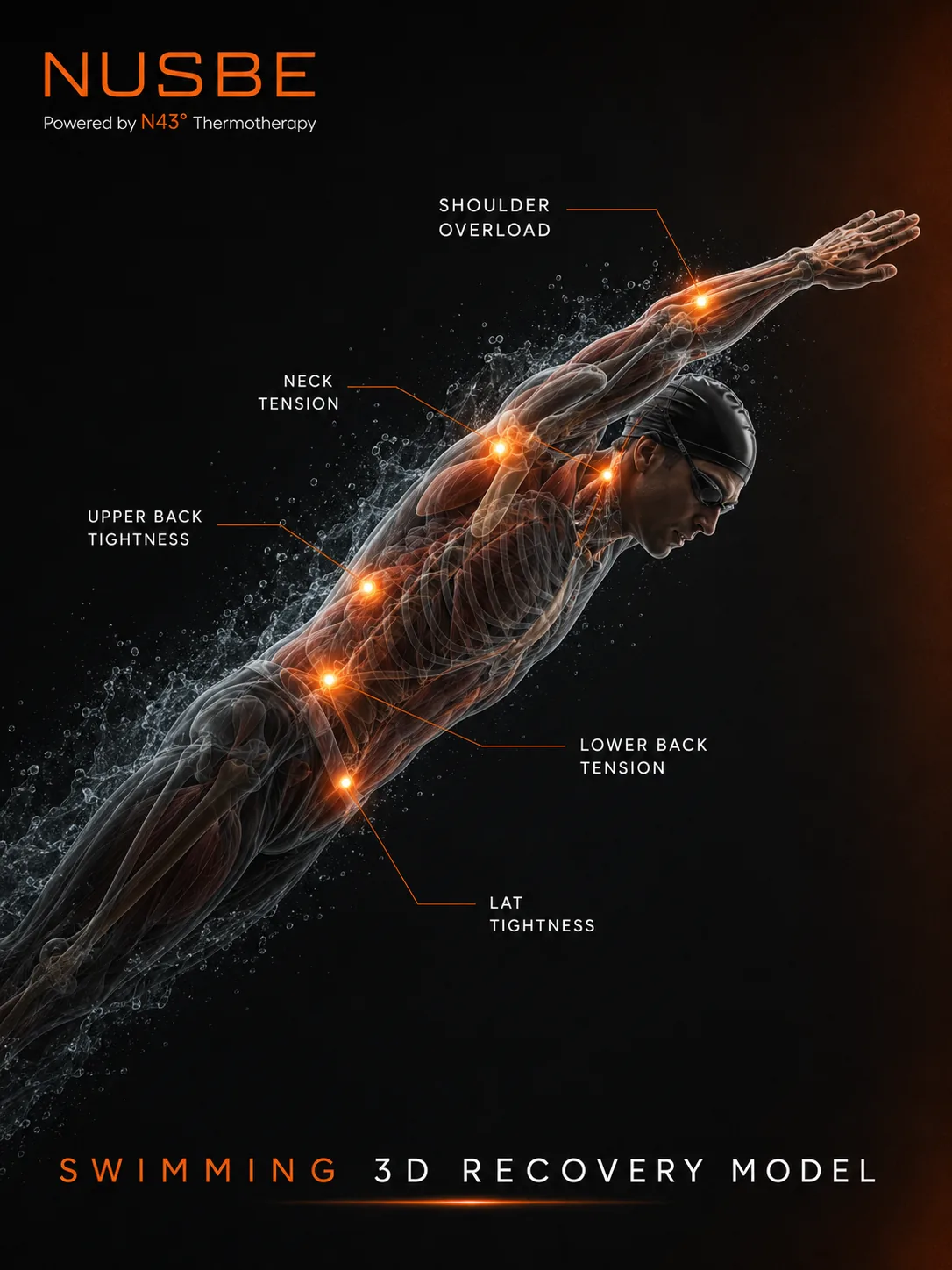
Two quiet loads
Shoulders get all the attention in swimming. Two others build up without anyone noticing.
The neck. If you breathe to the right every stroke, the right side of your neck rotates several hundred times in a session and the left barely moves. Over weeks that asymmetry is what you feel as one-sided stiffness — not an injury, but a load pattern nobody designed.
The lower back. Staying horizontal and streamlined is active work. As a session goes on and the legs sink slightly, the lower back does more to hold position, which is why back stiffness usually shows up in longer sessions rather than short fast ones.
What tends to help
- Breathe bilaterally, at least for part of your session. Introduce it gradually; it feels wrong at first if you have breathed one side for years. - Use a pull buoy sparingly, not as a way to avoid the position work. - Build session length gradually. Back stiffness tracks duration. - Add core work over time. A professional can guide something appropriate. - Warmth for stiffness. With no acute swelling, controlled warmth may help ease stiffness across the neck, upper back and lower back between sessions.
Malaysian pool reality
Most local swimmers train in the evening after a full desk day. The neck and lower back arrive at the pool already stiff from sitting, and then get asked to rotate and hold position for an hour.
If that is your pattern, movement breaks during the working day genuinely change how the session feels — more than anything you do afterwards.
When to get it assessed
See a qualified healthcare professional if pain radiates down an arm or leg, if there is numbness, tingling or weakness, or if stiffness lasts beyond a few days and is not easing.
Where NUSBE fits
A guided NUSBE session applies controlled, comfortable warmth to the neck, upper back and lower back at a consistent temperature and coverage.
This is recovery and comfort support. It is not treatment, and it does not replace care from a qualified healthcare professional.
Frequently asked questions
Why is my neck stiff on one side after swimming?
If you breathe to the same side every time, that side rotates hundreds of times per session while the other does not. The asymmetry is usually what you are feeling.
Will bilateral breathing fix it?
It often helps, because it spreads neck rotation across both sides. It feels awkward at first for swimmers used to one side, so introduce it gradually rather than all at once.
Why does my lower back ache after swimming?
Holding a streamlined horizontal position asks the lower back to work continuously, and as the legs sink with fatigue that demand increases. Longer sessions tend to show it more.
When should I get neck or back pain looked at?
If pain radiates down an arm or leg, if there is numbness, tingling or weakness, or if it persists beyond a few days, see a qualified healthcare professional.
Evidence referenced in this guide
- Wang Y et al., Physical Therapy in Sport 2021 — meta-analysis of 32 randomised trials on heat and cold for post-exercise muscle soreness.
- Network meta-analysis of cold and heat therapies for DOMS, 2022 — hot packs ranked highest for early soreness relief.
See the research behind our recovery claims on the science page.