
Why you're sore after pickleball, and how long it lasts
Soreness after pickleball usually comes from repeated overhead swings, sudden stops and direction changes, and gripping the paddle — so it lands in the shoulder, forearm, knees and lower back. For most players it peaks a day or two after playing and settles within a few days. Easy movement, sleep and warmth on stiff areas are the practical basics.
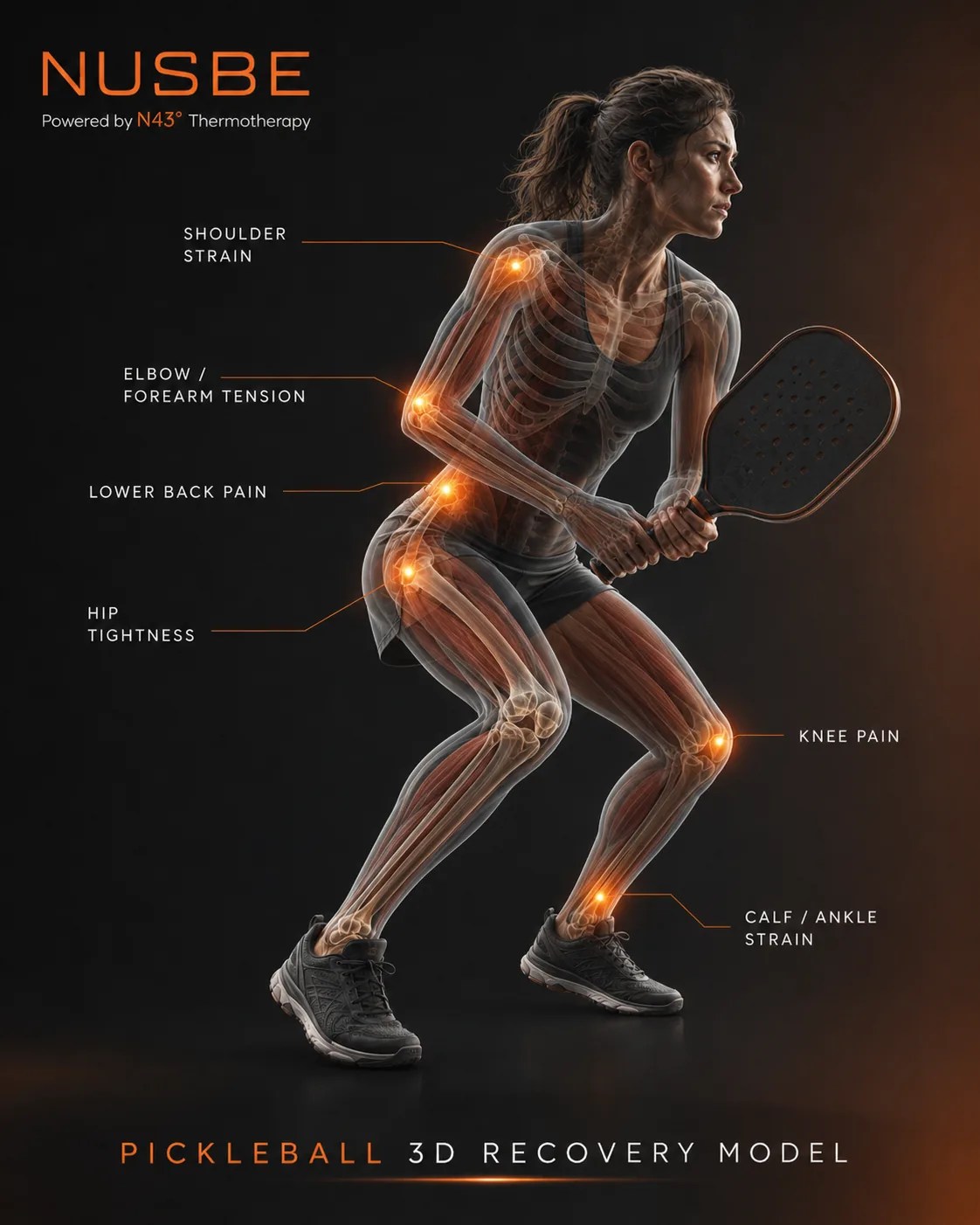
Why pickleball makes you sore in specific places
Pickleball looks gentle from the sideline. The court is small, the rallies are short, and the paddle is light. What the scoreboard hides is the number of repetitions: hundreds of swings, split-steps, lunges and direction changes in a single social session.
That pattern loads a predictable set of areas.
- Shoulder. Overhead serves and forceful drives ask the shoulder to produce and then slow down fast movement, over and over. - Forearm and grip. Holding and controlling the paddle for an hour or more is sustained work for the forearm, especially if you grip tightly. - Knees and hips. The sudden stops, pivots and lunges toward the kitchen line load the lower body far more than the court size suggests. - Lower back. Rotation combined with a low ready position asks the trunk to stabilise through every shot.
Soreness in these areas after a hard session is a normal training response, not evidence that something is damaged.
How long it usually lasts
Post-exercise soreness typically appears several hours after you finish, peaks around 24 to 48 hours later, and eases over the following days. It is usually worse when you are new to the sport, coming back after a break, or have just played longer or harder than usual.
| What you feel | What it usually means |
|---|---|
| General ache across several areas, worse next morning | Typical training soreness |
| Stiffness that eases as you warm up and move | Typical, and movement usually helps |
| Sharp or localised pain during a specific movement | Worth professional assessment |
| Swelling, giving way, numbness, or pain at rest | See a healthcare professional |
What actually helps
- Keep moving gently. Complete rest is rarely the fastest route. Easy walking and gentle range-of-movement often feel better than sitting still. - Space your sessions. Two hard days back to back is the most common cause of soreness that stacks up, particularly for players who took up the sport recently. - Protect sleep. It is unglamorous and it remains the strongest recovery lever anyone has. - Warmth for stiffness. Once there is no acute swelling, controlled warmth may help ease stiffness and make the area feel less guarded before your next session. - Loosen your grip. Many players hold the paddle far tighter than the shot requires, which adds forearm load for no benefit.
Where NUSBE fits
A guided NUSBE session applies controlled, comfortable warmth to the areas you choose — commonly the shoulder, forearm, lower back or legs after a pickleball week. The robotics keep the temperature and coverage the same every session, so recovery becomes something you can repeat rather than something that varies.
This is recovery and comfort support. It is not treatment, and it does not replace assessment by a qualified professional if something feels wrong.
Frequently asked questions
How long should soreness last after pickleball?
For most players it peaks around 24 to 48 hours after playing and eases within a few days. Soreness that is sharp, does not settle after several days, or comes with swelling deserves assessment by a healthcare professional.
Why are my shoulder and forearm the sorest?
The overhead and forceful swings load the shoulder, and gripping the paddle for a long session loads the forearm. Both are repeated hundreds of times in a session, which is why they often feel it first.
Should I stop playing if I am sore?
General soreness after a session is usually a normal training response, and easy movement often feels better than complete rest. Sharp pain, giving way, numbness or swelling are different, and are worth professional assessment before playing again.
Does warmth help after pickleball?
Warmth may help ease stiffness once there is no acute swelling. Research on post-exercise soreness found heat applied within about an hour of finishing may reduce how sore you feel the next day.
Evidence referenced in this guide
- Wang Y et al., Physical Therapy in Sport 2021 — meta-analysis of 32 randomised trials on heat and cold for post-exercise muscle soreness.
- Network meta-analysis of cold and heat therapies for DOMS, 2022 — hot packs ranked highest for early soreness relief.
See the research behind our recovery claims on the science page.