
A post-pickleball cool-down and stretch routine
A practical cool-down is short: a few minutes of easy walking to let your heart rate settle, then gentle stretches for the shoulder, forearm, hips, quads and calves. Research on post-exercise soreness suggests warmth applied within about an hour of finishing may reduce next-day soreness, so the sooner you start, the better it tends to work.
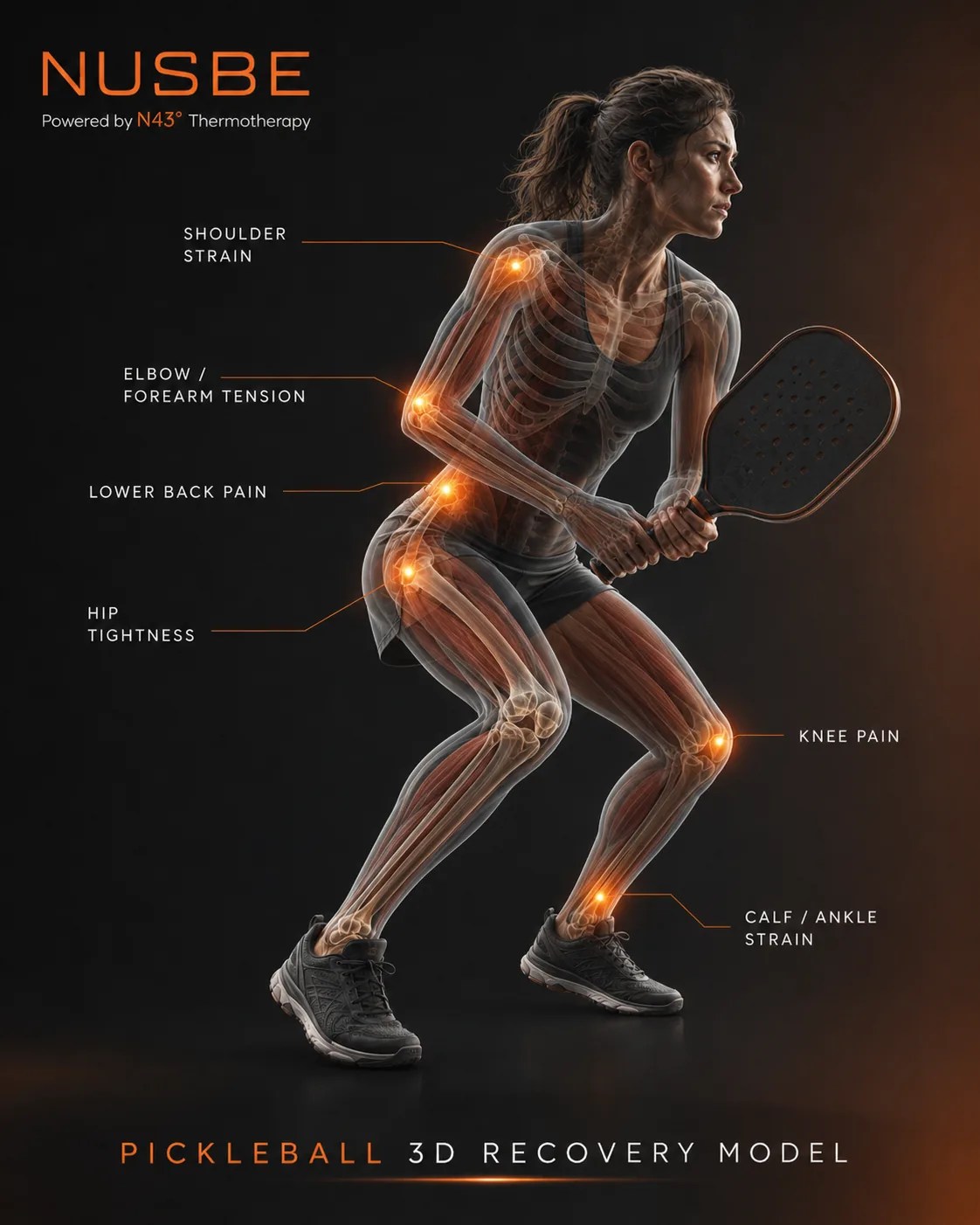
The first ten minutes
Walking straight from the last point to the car park is the most common mistake. A short cool-down costs very little and gives your body a gentler landing.
1. Two to three minutes of easy walking. Around the court or the car park is fine. The aim is simply to let your heart rate come down gradually rather than dropping from full effort to sitting. 2. Rehydrate while you walk. Malaysian court conditions mean most players finish a session down more fluid than they realise. 3. Then stretch, while the tissue is still warm.
What to stretch, and why
| Area | Why pickleball loads it |
|---|---|
| Shoulder and upper back | Overhead serves, drives, deceleration |
| Forearm and wrist | Paddle grip held across the whole session |
| Hips and glutes | Split-steps, pivots, lunges to the kitchen line |
| Quads and calves | Stopping, changing direction, staying low |
| Lower back | Rotation from a low ready position |
Hold each stretch somewhere around 30 seconds, breathe, and stop short of pain. This is a cool-down, not a flexibility session.
What the evidence actually supports
Two things are worth knowing:
- Timing matters. Research on post-exercise soreness found heat applied within about an hour of finishing may reduce next-day soreness. Recovery you do soon after playing tends to be more useful than recovery you get around to the following evening. - Effects are modest. Cool-downs and stretching support comfort. They are not a guarantee against soreness, and the strongest levers remain sleep and sensible spacing of hard sessions.
A realistic weekly shape
- Play day: cool-down, stretch, protect sleep that night. - Day after a hard session: easy movement rather than complete rest. - Between sessions: warmth on whatever still feels stiff — commonly the shoulder, forearm or calves. - Every week: at least one genuinely easy day.
Where NUSBE fits
If stiffness is the thing that keeps showing up between playing days, a guided NUSBE session applies controlled, comfortable warmth to the areas you choose, at the same temperature and coverage each time. Some players book it on the day after their heaviest session for exactly that reason.
This is recovery and comfort support, not treatment, and it does not replace care from a qualified healthcare professional.
Frequently asked questions
How long should a pickleball cool-down take?
Around ten minutes is enough for most players — a few minutes of easy walking, then gentle stretches for the areas the sport loads most.
Should I stretch before or after playing?
Before playing, a moving warm-up prepares you better than holding long stretches. Longer held stretches suit the cool-down after you finish, when the tissue is already warm.
Does timing matter for recovery?
It appears to. Research on post-exercise soreness found heat applied within about an hour of finishing may reduce how sore you feel the next day, so starting recovery sooner is generally better than leaving it until bedtime.
Which areas matter most after pickleball?
Shoulder and forearm from the swing and grip, and hips, quads and calves from the stops, pivots and lunges. The lower back is worth including if you play from a low ready position.
Evidence referenced in this guide
- Wang Y et al., Physical Therapy in Sport 2021 — meta-analysis of 32 randomised trials on heat and cold for post-exercise muscle soreness.
- Network meta-analysis of cold and heat therapies for DOMS, 2022 — hot packs ranked highest for early soreness relief.
See the research behind our recovery claims on the science page.