
Pickleball elbow: why grip and swing load the forearm
What players call "pickleball elbow" usually starts with the forearm: a tight grip, repeated striking, and wrist movement that loads the tendons attaching near the elbow. Easing grip pressure, checking paddle setup and spacing sessions are the practical levers. Persistent or sharp elbow pain is a recognised condition that deserves professional assessment rather than self-management.
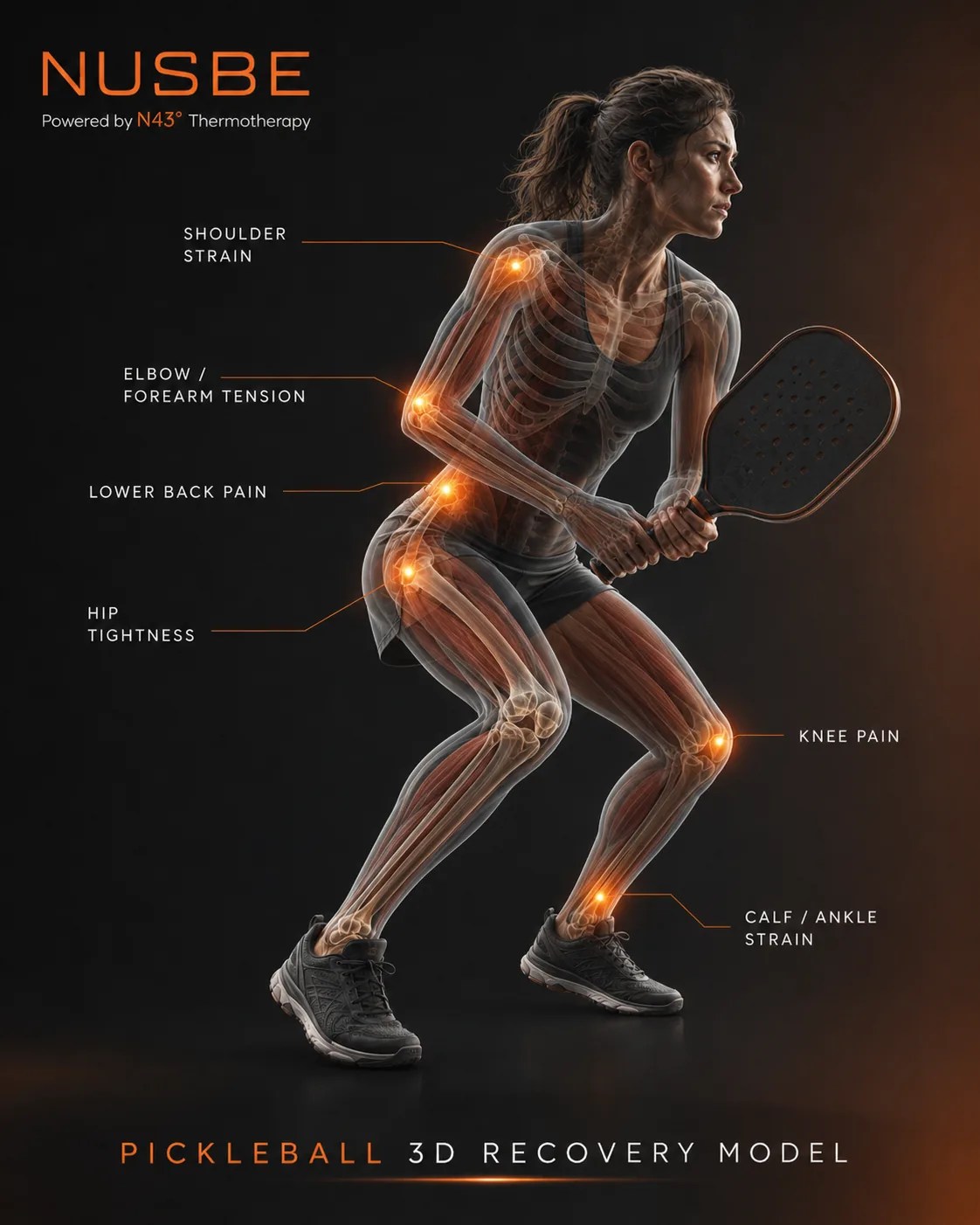
The elbow is where you feel it, not where the work happens
The muscles that control your wrist and fingers sit along the forearm and attach by tendons close to the elbow. Every time you grip the paddle, absorb a ball, or flick the wrist through a shot, that chain does work.
Play for an hour, and it does that work several hundred times.
This is why players describe the sensation as elbow pain but often find the forearm is what feels tight and tender to touch. The load is distributed along the muscle; the discomfort concentrates where the tendons attach.
What tends to make it worse
- Gripping too hard. The single most common contributor. Most shots need far less grip pressure than players use. - A sudden jump in playing hours. New players and new converts from tennis are the most affected, because the tissue has not yet adapted. - Paddle setup that does not suit you. Grip size and paddle weight change how hard the forearm has to work. - No warm-up. Going straight into hard drives from cold gives the forearm no preparation.
What genuinely helps
- Consciously loosen the grip between points. Many players are surprised how much pressure they hold by default. - Space your sessions so the forearm has recovery days, especially in your first months of playing. - Review your paddle with a coach or specialist retailer. - Warmth for general tightness. With no acute swelling, controlled warmth may help ease forearm stiffness and make the area feel less tense between sessions.
When to stop self-managing
Please see a qualified healthcare professional if the elbow is painful to touch over a specific point, hurts when you grip everyday objects like a kettle, is getting worse week on week, or has not settled after a couple of weeks of reduced load.
Persistent elbow pain is a recognised condition with established care pathways. It is not something to work through, and it is not something warmth resolves.
Where NUSBE fits
A guided NUSBE session can apply controlled, comfortable warmth to the forearm and upper arm when the aim is easing general tightness between playing days. The robotics keep the temperature and coverage consistent every session.
This is recovery and comfort support. It is not a medical assessment, and it does not replace care from a qualified healthcare professional.
Frequently asked questions
Is pickleball elbow the same as tennis elbow?
Players use the terms for a similar pattern of discomfort on the outside of the elbow, linked to repeated gripping and striking. Both are recognised conditions, and persistent cases should be assessed by a healthcare professional rather than managed alone.
Why does my forearm feel tight when the pain is at my elbow?
The muscles that control your wrist and grip run along the forearm and attach by tendons near the elbow. Sustained gripping loads that whole chain, so forearm tightness and elbow discomfort often appear together.
Can changing my paddle or grip help?
Many players find that a lighter grip pressure, and a grip size and paddle weight suited to them, reduces how hard the forearm has to work. A coach or specialist retailer can help review the setup.
Does warmth help forearm tightness?
For general tightness with no acute swelling, warmth may help ease stiffness and make the forearm feel less tense. It is comfort support and is not a treatment for a diagnosed elbow condition.
Evidence referenced in this guide
- Wang Y et al., Physical Therapy in Sport 2021 — meta-analysis of 32 randomised trials on heat and cold for post-exercise muscle soreness.
- Network meta-analysis of cold and heat therapies for DOMS, 2022 — hot packs ranked highest for early soreness relief.
See the research behind our recovery claims on the science page.