
Playing pickleball after 40: recovery between sessions
For players who take up pickleball in their forties and beyond, the limit is usually recovery rather than fitness or skill. Soreness tends to last a little longer, so spacing sessions, building playing hours gradually, and keeping easy movement between games matter more than any single recovery method. Warmth may help ease stiffness between playing days.
Why recovery becomes the limiting factor
Pickleball is unusually good at attracting people who have not played a sport in years. The barrier to entry is low, it is social, and a session is genuinely enjoyable. That combination produces a very common pattern: enthusiasm arrives long before conditioning does.
The result is rarely a lack of fitness on court. It is that the soreness from Tuesday has not cleared by Thursday, and by the weekend everything feels stiff.
For most players over 40, the honest constraint is not skill or cardio. It is how quickly the body clears the load between sessions.
What actually changes
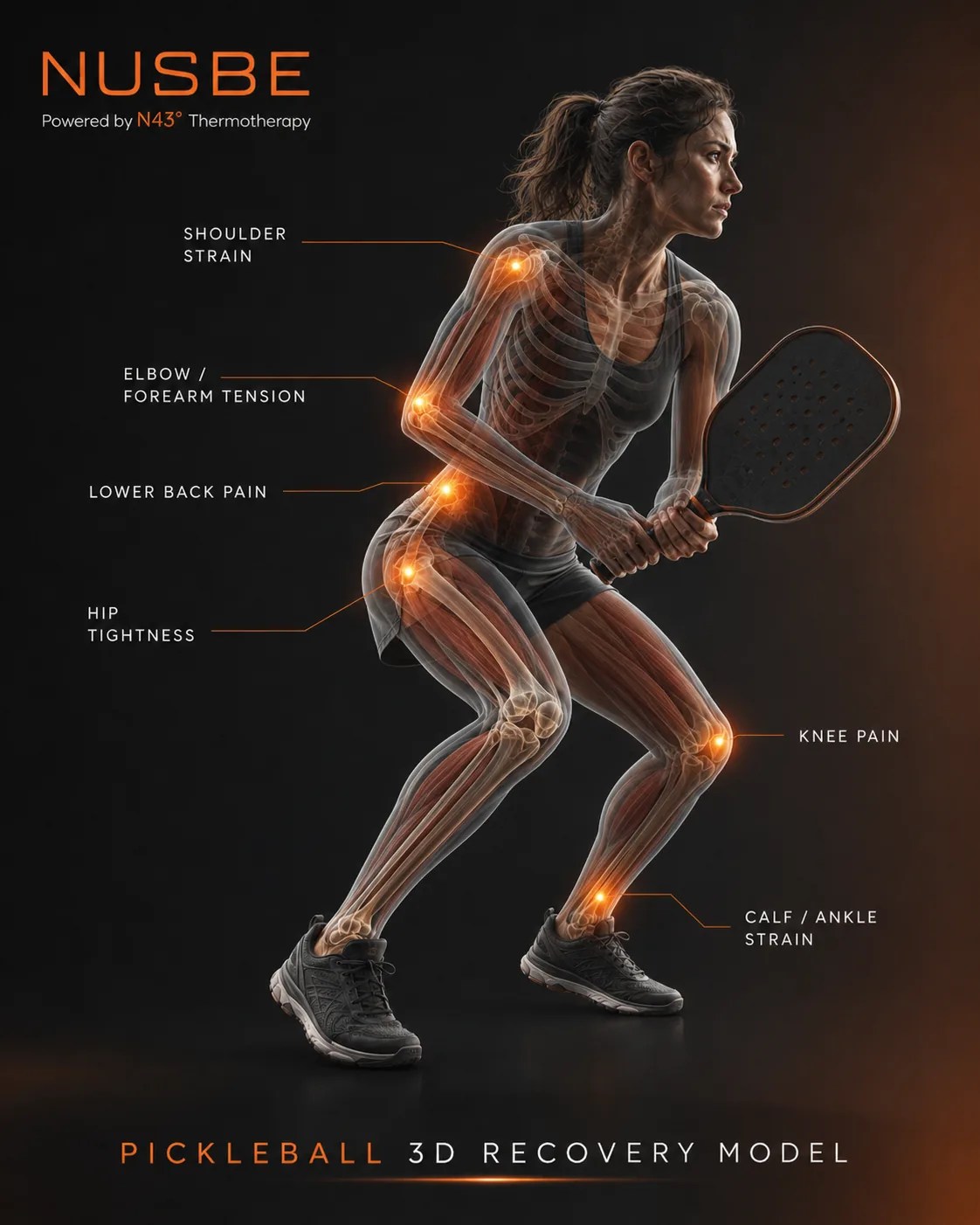
- Soreness lingers a little longer. The pattern is the same; the timeline stretches. - Morning stiffness is more noticeable, particularly in the lower back, calves and shoulders. - Sudden jumps hurt more. Going from zero to five sessions a week is the single most common cause of stacked soreness. - Sleep matters more, not less.
None of this means you should play less. It means the spacing deserves as much thought as the playing.
A sustainable pattern
| Day | What it looks like |
|---|---|
| Play day | Session, short cool-down, protect sleep |
| Day after | Easy movement — a walk, light mobility |
| Second day | Play again, or a genuinely easy day |
| Every week | At least one full easy day |
Build playing hours gradually. If you want to add a session, add it and hold there for a few weeks before adding another.
What helps between sessions
- Keep moving on off days. Complete rest tends to leave you stiffer than gentle activity. - Warmth for stiffness. With no acute swelling, controlled warmth may help ease stiffness in the areas that keep showing up, and can make you feel less guarded before your next game. - Strength work, eventually. Gradual strength training supports the shoulders, hips and knees over a season. A professional can guide something suitable. - Get persistent problems looked at. Anything sharp, worsening week on week, or waking you at night deserves professional assessment rather than another week of playing through it.
Where NUSBE fits
A guided NUSBE session applies controlled, comfortable warmth to the areas you choose — commonly shoulders, lower back and calves for players in this group — with the same temperature and coverage every time. Many players use it on the day after their heaviest session so the next one feels better.
This is recovery and comfort support. It is not treatment, and it does not replace care from a qualified healthcare professional.
Frequently asked questions
Does recovery really take longer as you get older?
Many players notice soreness lingering a little longer and stiffness being more noticeable in the morning. Training history, sleep, and how quickly you increased playing hours matter at least as much as age itself.
How many times a week should I play?
There is no universal number. A common pattern that works is two to three sessions with recovery days between, increasing gradually rather than jumping to daily play because the sport is enjoyable.
What is the most common mistake newer players make?
Going from nothing to playing four or five days a week within a few weeks. The enjoyment is real, but the tissue needs time to adapt, and stacked soreness is usually the result.
Can warmth help between sessions?
With no acute swelling, controlled warmth may help ease stiffness and make an area feel less guarded before the next session. It supports comfort rather than changing your fitness.
Evidence referenced in this guide
- Wang Y et al., Physical Therapy in Sport 2021 — meta-analysis of 32 randomised trials on heat and cold for post-exercise muscle soreness.
- Network meta-analysis of cold and heat therapies for DOMS, 2022 — hot packs ranked highest for early soreness relief.
See the research behind our recovery claims on the science page.