

Why you're sore after golf, and how long it lasts

Golf combines repeated swings with a long period on your feet. Notice whether discomfort follows swinging, walking or carrying the bag; the next step depends on that pattern.

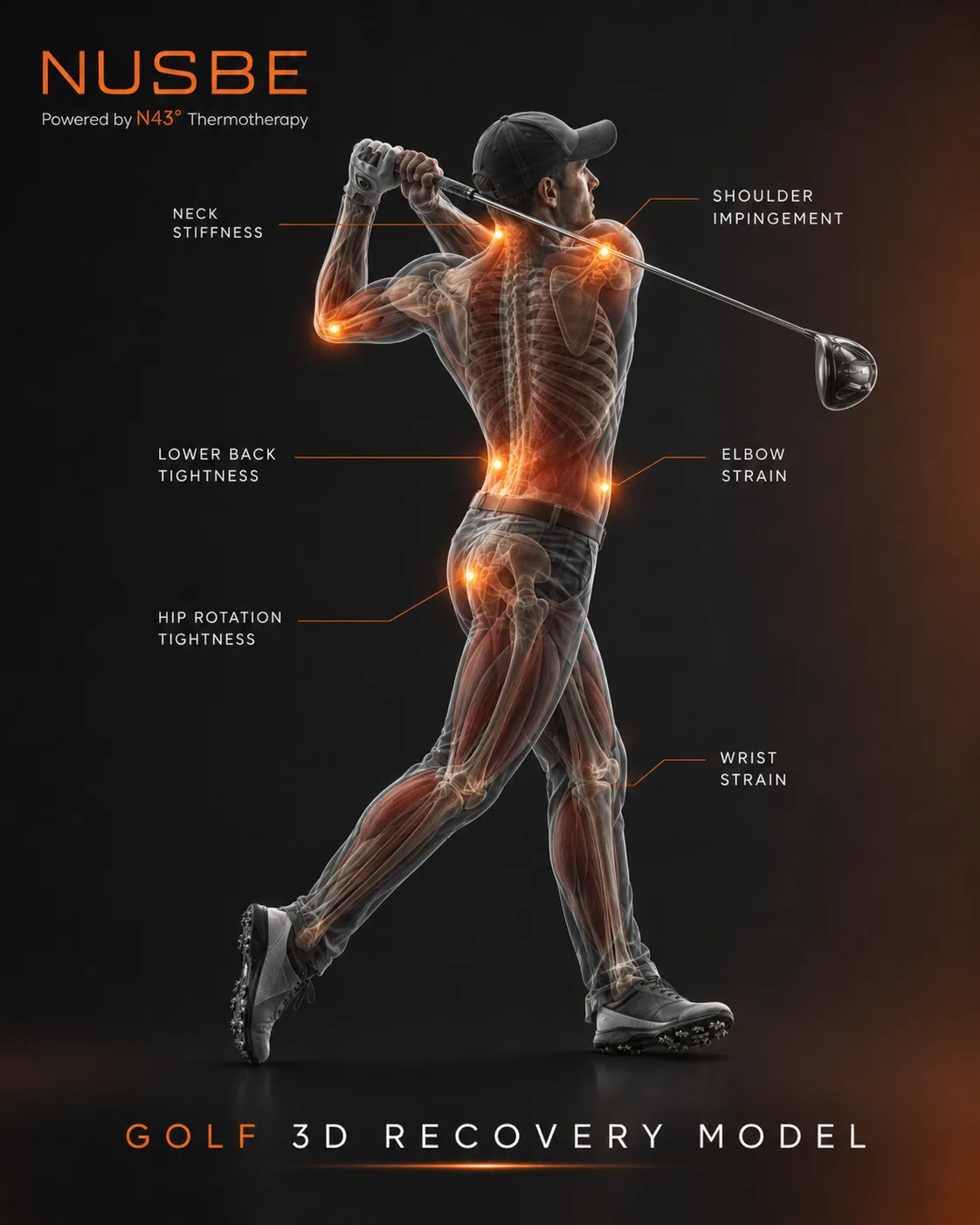
Golf recovery model showing neck, shoulder, lower back, hip and wrist load areas
Golf recovery model — neck, shoulders, lower back, hips and wrists.

What to notice

A practice-range session and a walking round are different workloads. Include warm-up balls, practice swings and any extra range session when reviewing a busy golf week.

Practical next steps

  • Pause the swing or carrying task that repeatedly provokes pain.
  • Ask a professional to review your swing rather than repeatedly changing it to avoid discomfort.
  • Plan the next round around how comfortably you walk and swing, not the booking alone.

When to get help

Arrange assessment for persistent or worsening pain, swelling or difficulty using the area normally. After an injury, seek urgent help for severe pain, deformity, numbness or inability to bear weight.

Exploring NUSBE

NUSBE offers operator-guided thermotherapy wellness sessions. Discuss suitability first; this does not replace an injury assessment. See the session experience.

Frequently asked questions

Does soreness mean my swing is wrong?

Not necessarily. Recent workload, equipment and technique can all be worth reviewing, while persistent pain requires assessment rather than a diagnosis from swing appearance.

How long does ordinary post-exercise soreness last?

Delayed muscle soreness often appears one to three days after unfamiliar activity and usually eases over the following few days. That pattern does not explain sudden injury pain or symptoms that keep worsening.

Evidence referenced in this guide

Related guides

Explore the evidence

Request a NUSBE session