
Walking 18 holes: calf, foot and leg recovery
Walking a full course is four to five hours on your feet, often carrying or pushing weight and frequently in heat, which loads the calves, feet and hips more than players expect. Rehydrating, getting off your feet afterwards, easy movement the next day and warmth on stiff areas are the practical levers.
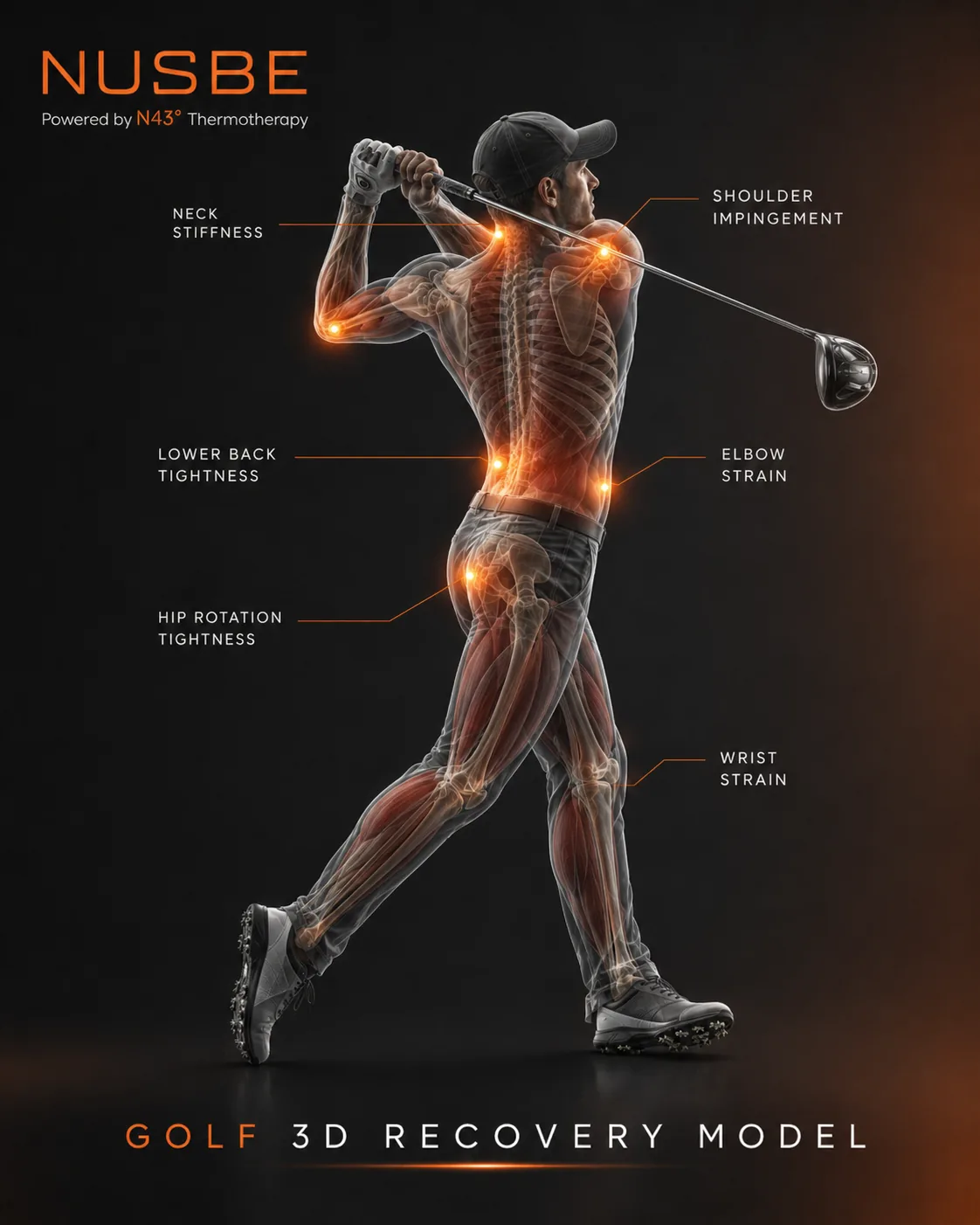
Low intensity, high duration
Nobody finishes a round out of breath. That is exactly why the leg fatigue surprises people the next morning.
Four to five hours of walking, often over undulating ground, frequently carrying a bag or pushing a trolley, in heat and humidity — the intensity is low and the total is not.
The load lands mostly in:
- Calves and feet, from the hours of walking.
- Hips, from the combination of walking and rotating.
- Shoulders and lower back, if you carry.
A practical post-round routine
| When | What to do |
|---|---|
| Straight after | Rehydrate properly; this is often under-done in the heat |
| First hour | Warmth on stiff areas, if there is no swelling |
| That evening | Get off your feet, gentle calf and hip movement |
| Next day | Easy walking rather than complete rest |
What matters most in local conditions
Heat and humidity are the part visiting advice usually skips. Playing a full round in Malaysian conditions adds a real fluid and fatigue cost, and it is common to feel it in the last three holes and again the next morning. Drinking consistently across the round, rather than catching up at the turn, makes a noticeable difference.
Where NUSBE fits
A guided NUSBE session applies controlled, comfortable warmth to the calves, hips and lower back at a consistent temperature and coverage. Golfers often use it after a weekend round before returning to work on Monday.
This is recovery and comfort support. It is not treatment, and it does not replace care from a qualified healthcare professional.
Frequently asked questions
Why are my legs tired after golf when I barely ran?
Duration is the load. Four or five hours of continuous walking, often on undulating ground and carrying weight, accumulates well beyond what the low intensity suggests.
Does carrying versus a buggy make much difference?
Yes, particularly for the shoulders, lower back and calves. Carrying adds weight to every step, and most players notice it in the last few holes.
Does the heat matter?
It does. Playing in Malaysian conditions adds a fluid and fatigue cost on top of the walking, and players who under-drink usually feel it in the final holes and the following day.
What helps the evening after a round?
Rehydrate, get off your feet, gentle calf and hip movement, and warmth on whatever stays stiff once there is no swelling.
Evidence referenced in this guide
- Wang Y et al., Physical Therapy in Sport 2021 — meta-analysis of 32 randomised trials on heat and cold for post-exercise muscle soreness.
- Network meta-analysis of cold and heat therapies for DOMS, 2022 — hot packs ranked highest for early soreness relief.
See the research behind our recovery claims on the science page.