
Why you're sore after cycling, and how long it lasts
Cycling soreness is unusual because it comes from holding one position for hours as much as from the pedalling. Quads do the driving work, while the neck, shoulders and lower back hold a static posture the whole ride. That is why riders often feel it worst after getting off the bike. Easy spinning, sleep and warmth on stiff areas are the practical basics.
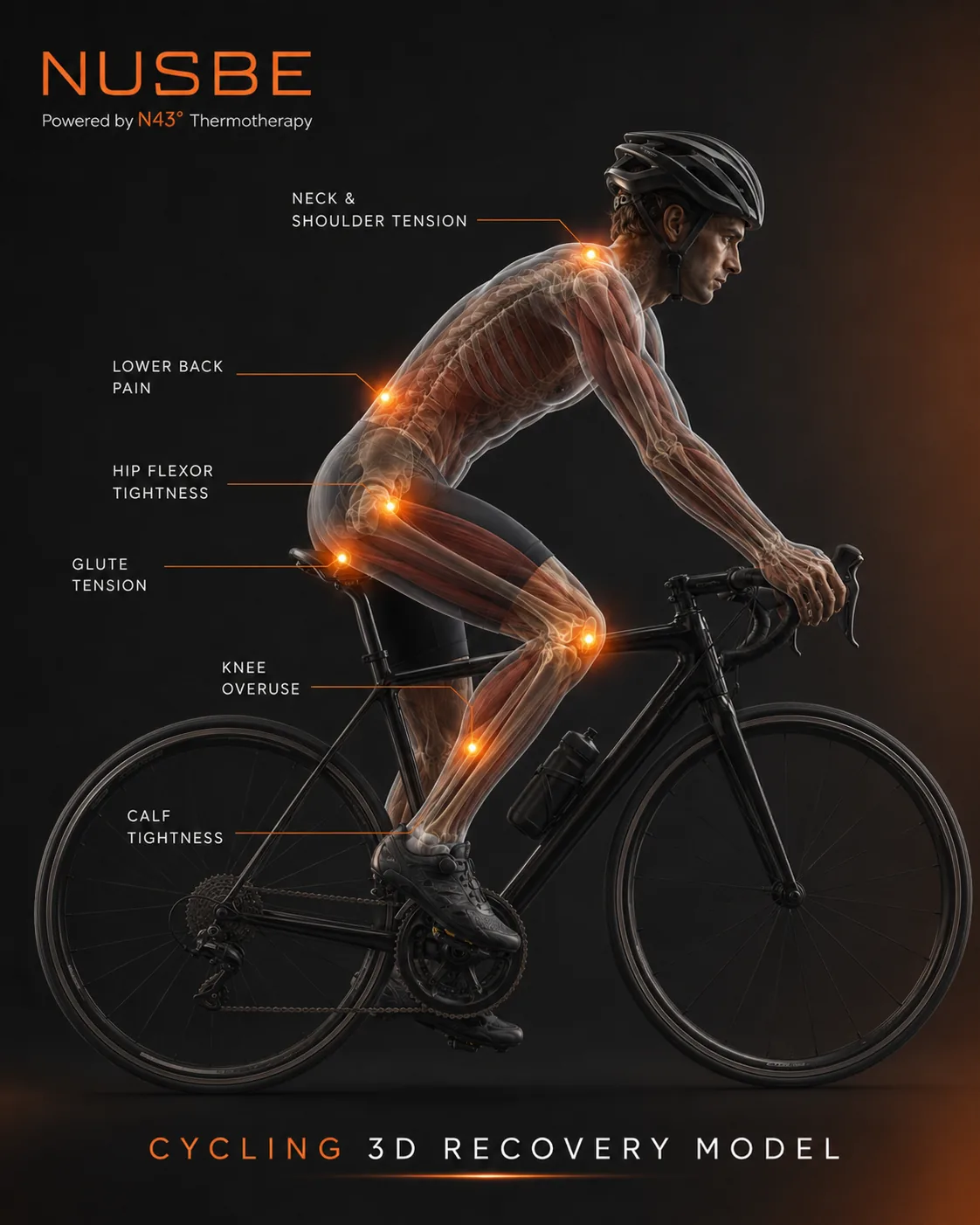
Two different kinds of load
Most sports tire you through movement. Cycling does something more unusual: it combines hard repetitive work in the legs with hours of holding still everywhere else.
- Quads and glutes do the driving work, thousands of pedal strokes per hour. - Neck and shoulders hold your head up against a forward position for the entire ride. - Lower back stabilises the trunk over the saddle without a break. - Hands and forearms carry weight through the bars.
That second category is why riders so often describe feeling fine on the bike and stiff the moment they get off.
How long it usually lasts
| What you feel | What it usually means |
|---|---|
| Quad heaviness, worse the next morning | Typical post-ride soreness |
| Neck and shoulder tightness after a long ride | Common with sustained position |
| Numbness or pins and needles in hands or arms | Worth professional assessment |
| Knee pain at a specific point through the stroke | Check bike fit, and get it looked at |
That last row matters in cycling more than most sports. Knee discomfort that appears at the same point in every pedal stroke often points to setup rather than fatigue, and a bike fit is usually the right first call.
What actually helps
- Spin easy the day after. Riders have used this for decades because it works better than sitting still. - Break the position up on long rides. Change hand position, stand occasionally, and roll the shoulders. - Get a bike fit if the same area complains every ride. No recovery routine fixes a position problem. - Warmth for stiffness. With no acute swelling, controlled warmth may help ease stiffness in the quads, lower back and shoulders after long rides. - Protect sleep, especially around back-to-back ride days.
Where NUSBE fits
A guided NUSBE session applies controlled, comfortable warmth to the areas you choose — commonly quads, lower back and shoulders after a long ride weekend — at the same temperature and coverage every time.
This is recovery and comfort support. It is not treatment, and it does not replace care from a qualified healthcare professional.
Frequently asked questions
Why do I feel worse after the ride than during it?
Holding a fixed position loads the neck, shoulders and lower back statically, and you often only notice once you stop and stand up. Post-exercise soreness in the legs also peaks a day or two later rather than immediately.
Is neck and shoulder pain normal on long rides?
Holding the head up in a forward riding position for hours is demanding, so general tightness is common. Numbness, pins and needles, or pain running down the arm are different and should be assessed by a healthcare professional.
Should I rest completely the day after a long ride?
Usually not. Easy spinning on the flat is a well-established way riders keep moving without adding load, and most find it feels better than complete rest.
Does warmth help after cycling?
Once there is no acute swelling, warmth may help ease stiffness. Research on post-exercise soreness found heat applied within about an hour of finishing may reduce how sore you feel the next day.
Evidence referenced in this guide
- Wang Y et al., Physical Therapy in Sport 2021 — meta-analysis of 32 randomised trials on heat and cold for post-exercise muscle soreness.
- Network meta-analysis of cold and heat therapies for DOMS, 2022 — hot packs ranked highest for early soreness relief.
See the research behind our recovery claims on the science page.