
Quad and lower back tightness after cycling
Quads take the driving work in cycling and the lower back stabilises the trunk over the saddle for the whole ride, so both are commonly tight afterwards. Easy spinning, gradual build-up of ride volume, bike fit and warmth on stiff areas are the practical levers. Back pain that travels down the leg deserves professional assessment.
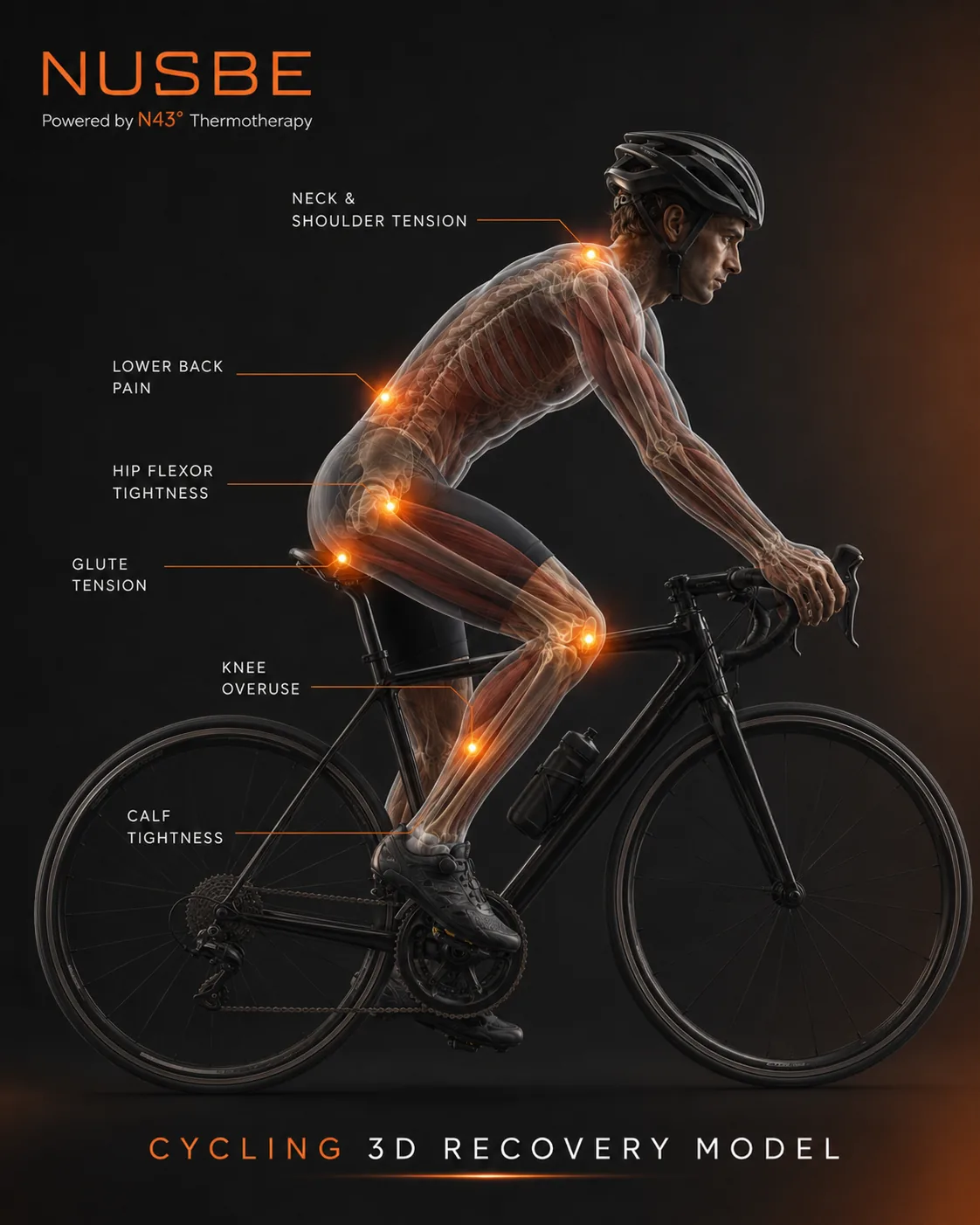
The engine and the anchor
Cycling splits the work cleanly. The quads are the engine, pushing down through thousands of strokes an hour. The lower back is the anchor, holding your trunk steady over the saddle so that the engine has something to push against.
Both jobs run for the whole ride. Neither gets a rest until you stop.
That is why the two areas so often complain together after a long day, and why riders who fix one sometimes find the other settles too.
What loads what
| Element of the ride | Where it lands |
|---|---|
| Sustained pedalling on the flat | Quads |
| Climbing, especially seated | Quads, glutes, lower back |
| Holding an aggressive position | Lower back, neck |
| Long duration at any intensity | All of the above, cumulatively |
What supports recovery
- Spin easy the day after. Low resistance, high cadence, short duration. - Build ride length gradually. Jumping from 40 km to 120 km in a fortnight is the most common cause of soreness that stacks up. - Check the fit if it is every ride. A recurring pattern usually means setup, not weakness. - Warmth for stiffness. With no acute swelling, controlled warmth may help ease tightness in the quads and lower back between rides. - Strength work over time. Gradual leg and trunk strengthening supports longer rides across a season; a professional can guide something suitable.
When to get it assessed
See a qualified healthcare professional if back pain travels down the leg, if you get numbness or weakness, or if the pain is present at rest and not just after riding. Those patterns are different from muscular tightness.
Where NUSBE fits
A guided NUSBE session applies controlled, comfortable warmth to the quads and lower back at a consistent temperature and coverage. Riders often book it after a big weekend before returning to training.
This is recovery and comfort support. It is not treatment, and it does not replace care from a qualified healthcare professional.
Frequently asked questions
Why are my quads so much sorer than my hamstrings?
The pedal stroke is dominated by pushing down, which is largely quad work. Hamstrings contribute less in most riders, so the front of the thigh usually takes the bulk of the load.
Is lower back tightness after cycling normal?
General tightness after a long ride is common, because the lower back stabilises your trunk continuously without changing position. Pain travelling down the leg, numbness or weakness are different and should be assessed by a healthcare professional.
Can bike fit cause lower back tightness?
Frequently. A reach that is too long, a saddle too high, or a position that outruns your current mobility all increase how hard the lower back works. If it happens every ride, a fit is the sensible first step.
What helps between rides?
Easy spinning rather than complete rest, sensible spacing of long rides, gradual volume increases, and warmth on areas that stay stiff.
Evidence referenced in this guide
- Wang Y et al., Physical Therapy in Sport 2021 — meta-analysis of 32 randomised trials on heat and cold for post-exercise muscle soreness.
- Network meta-analysis of cold and heat therapies for DOMS, 2022 — hot packs ranked highest for early soreness relief.
See the research behind our recovery claims on the science page.