
Neck and shoulder pain after long rides
Neck and shoulder tightness on long rides comes from holding the head up against a forward position for hours, not from hard movement. Breaking up the position, checking bike fit and warmth on stiff areas help. Numbness, pins and needles, or pain travelling down the arm are different and deserve professional assessment.
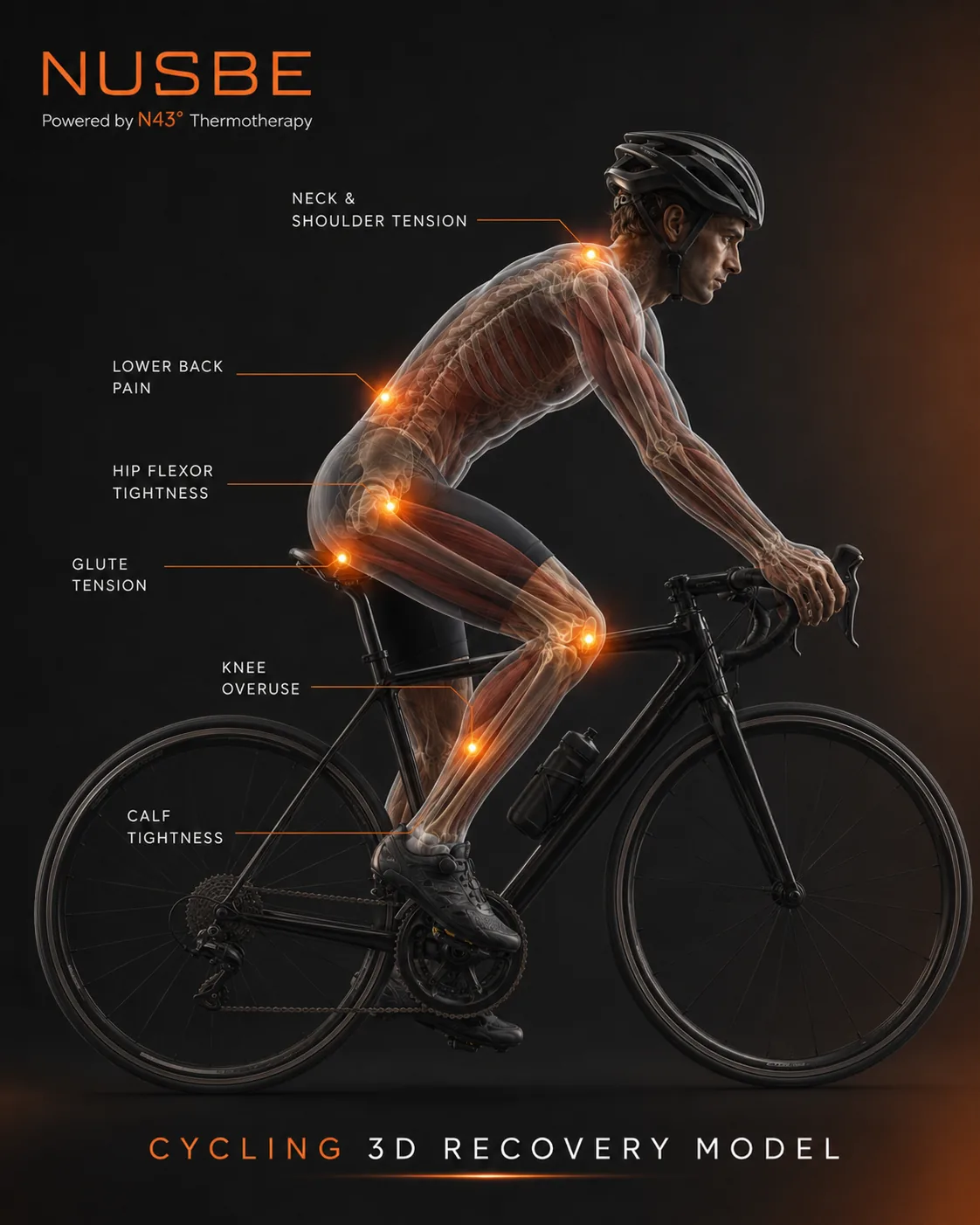
Static work is still work
On a bike your legs move and almost nothing else does. The muscles at the back of your neck spend the whole ride holding your head up against a forward lean, and your shoulders carry weight through the bars.
Neither of those feels like effort in the moment. Both accumulate.
This is why neck and shoulder tightness tracks time in the saddle more closely than how hard you rode. A gentle four-hour ride can leave you stiffer than a savage one-hour session.
What tends to make it worse
- A position that is too long or too low for your current flexibility. - Never changing hand position across a long ride. - A week of desk work beforehand, which starts the neck already loaded — a very common pattern for Malaysian weekend riders. - Riding with a locked upper back, so the neck does all the work.
What actually helps
- Move on the bike. Change hand position regularly, stand for short stretches, and roll the shoulders on quiet sections. - Get a bike fit if it happens every ride. This is the highest-value fix and no amount of recovery substitutes for it. - Look after the desk week too. If you sit all week and ride at weekends, movement breaks during the week change how the neck feels on Sunday. - Warmth for stiffness. With no acute swelling, controlled warmth may help ease tightness across the neck, shoulders and upper back after long rides.
When it is not just tightness
See a qualified healthcare professional if you get numbness or pins and needles in the hands or arms, weakness, or pain that travels down the arm. Those are different from muscular tightness and warrant proper assessment.
Where NUSBE fits
A guided NUSBE session applies controlled, comfortable warmth to the neck, shoulders and upper back at a consistent temperature and coverage. Riders often use it the evening after a long weekend ride.
This is recovery and comfort support. It is not a medical assessment, and it does not replace care from a qualified healthcare professional.
Frequently asked questions
Why does my neck hurt more the longer I ride?
The muscles at the back of the neck hold your head up against gravity in a forward position. That is sustained static work, and it accumulates with time in the saddle rather than with effort.
Is it my bike fit or my body?
Often both. A position that is too long or too low increases how hard the neck works, and limited upper-back mobility does the same. A bike fit is the sensible first check if it happens every ride.
When should I get it looked at?
Numbness, pins and needles, weakness, or pain travelling down the arm are not ordinary riding stiffness and should be assessed by a healthcare professional.
Does warmth help neck and shoulder tightness?
For general tightness with no acute swelling, warmth may help ease stiffness and make the area feel less tense after a long ride.
Evidence referenced in this guide
- Wang Y et al., Physical Therapy in Sport 2021 — meta-analysis of 32 randomised trials on heat and cold for post-exercise muscle soreness.
- Network meta-analysis of cold and heat therapies for DOMS, 2022 — hot packs ranked highest for early soreness relief.
See the research behind our recovery claims on the science page.