
Shoulder soreness after pickleball, and what helps
The shoulder does two demanding jobs in pickleball: producing fast overhead and drive movements, then slowing the arm down again. Repeated hundreds of times, that leaves the shoulder and upper back sore. General post-session soreness usually settles in a few days with easy movement, spacing, and warmth on stiff areas. Sharp pain, weakness or night pain deserve a professional opinion.
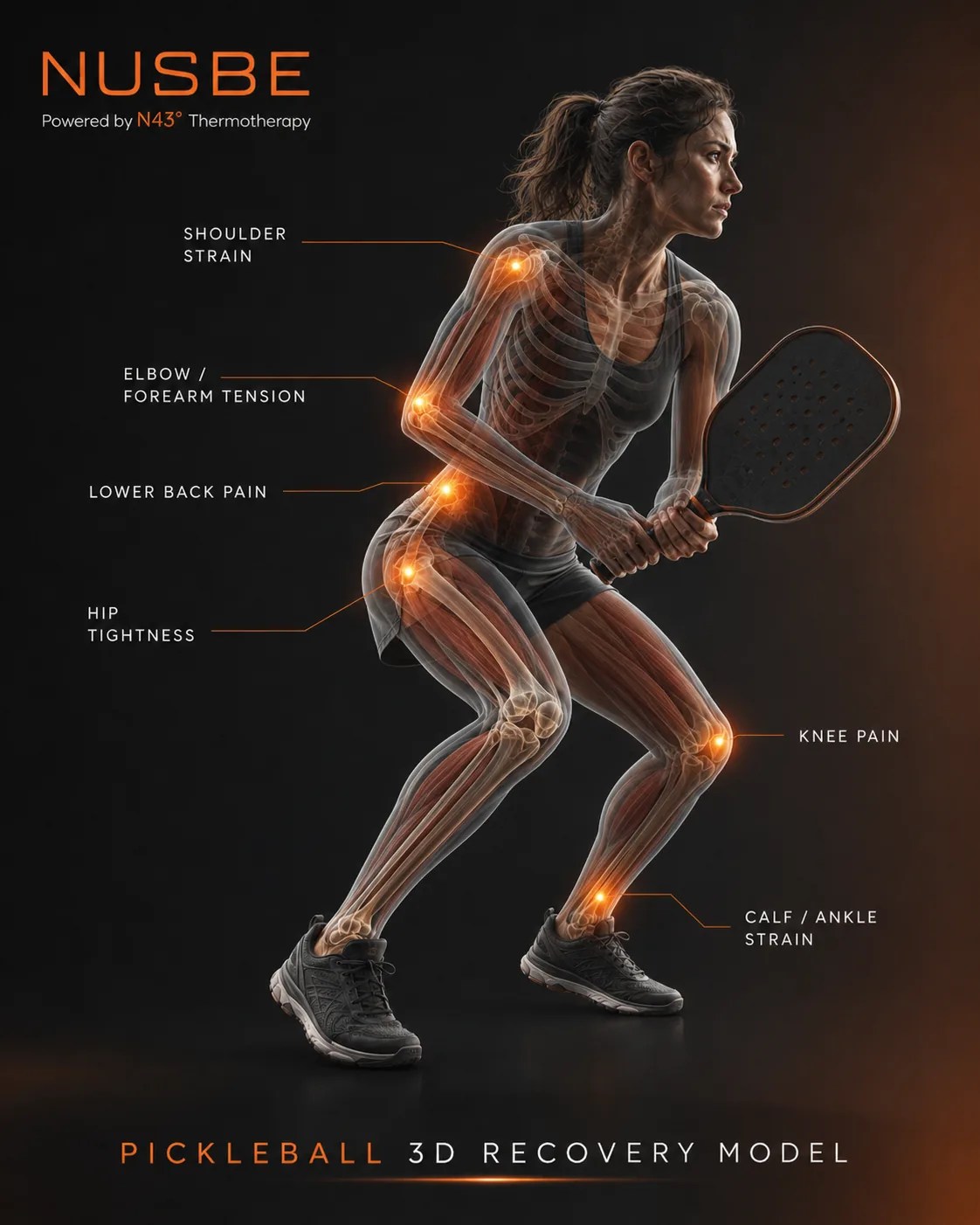
What the shoulder actually does in pickleball
Serving, driving and overhead put-aways all ask the same thing: accelerate the arm quickly, then decelerate it under control. That second half is the part most players never think about, and it is demanding work for the muscles around the shoulder blade and the back of the shoulder.
Add a paddle grip that is tighter than it needs to be, and the load travels down into the forearm as well.
Because a social session can involve hundreds of these repetitions, shoulder soreness is one of the most common complaints players describe — particularly in the first months of playing, after a long break, or after a tournament day.
Sore, or something more?
| What you notice | Usual reading |
|---|---|
| General ache across shoulder and upper back, worse the next day | Typical training soreness |
| Stiffness first thing that eases as you move | Typical |
| Sharp catch at a specific point in the swing | Worth professional assessment |
| Weakness lifting the arm, or pain that wakes you at night | See a healthcare professional |
That bottom row matters. Shoulder pain that disturbs sleep or comes with weakness is not something to work through, and it is not something warmth is the answer to.
What supports recovery
- Space the hard sessions. Playing three long days in a row is the most common cause of shoulder soreness that never quite clears. - Warm up the shoulder before playing, rather than using the first three games as the warm-up. - Ease the grip. A tighter grip does not produce a better shot, and it adds forearm and shoulder load across a whole session. - Warmth for stiffness. With no acute swelling, controlled warmth may help ease stiffness around the shoulder and upper back and make the area feel less guarded before your next session. - Build capacity gradually. Adding playing hours slowly gives the shoulder time to adapt.
Where NUSBE fits
A guided NUSBE session applies controlled, comfortable warmth to the shoulder and upper back at a consistent temperature and coverage. Many players use it between playing days, when the aim is simply to feel less stiff going into the next session.
This is recovery and comfort support, not treatment. If your shoulder is painful at rest, weak, or waking you at night, please see a qualified healthcare professional first.
Frequently asked questions
Why does my shoulder ache after pickleball but not during?
Soreness from repeated loading typically appears hours after you finish and peaks the next day. Feeling it afterwards rather than during a session is a common pattern.
Is shoulder soreness after pickleball normal?
General aching across the shoulder and upper back after a hard session is a common training response. Sharp pain during a specific movement, weakness lifting the arm, or pain that wakes you at night are different and should be assessed by a healthcare professional.
Should I use heat or ice on a sore shoulder?
If the area is warm, swollen or freshly irritated, short ice applications are the sensible first choice. For general stiffness with no swelling, warmth may help ease the tightness and make movement feel easier.
How can I reduce shoulder load next session?
Spacing hard sessions, warming the shoulder up before play, and avoiding a sudden jump in playing hours are the practical levers. A coach can also review whether technique is adding avoidable overhead load.
Evidence referenced in this guide
- Wang Y et al., Physical Therapy in Sport 2021 — meta-analysis of 32 randomised trials on heat and cold for post-exercise muscle soreness.
- Network meta-analysis of cold and heat therapies for DOMS, 2022 — hot packs ranked highest for early soreness relief.
See the research behind our recovery claims on the science page.