
Recovery inside a heavy triathlon training week
In a heavy triathlon week, recovery is structural rather than something added afterwards: easy sessions kept genuinely easy, one full down day, sleep protected, and a lighter week every third or fourth. Warmth on recurring stiff areas supports comfort on top of that structure, not instead of it.
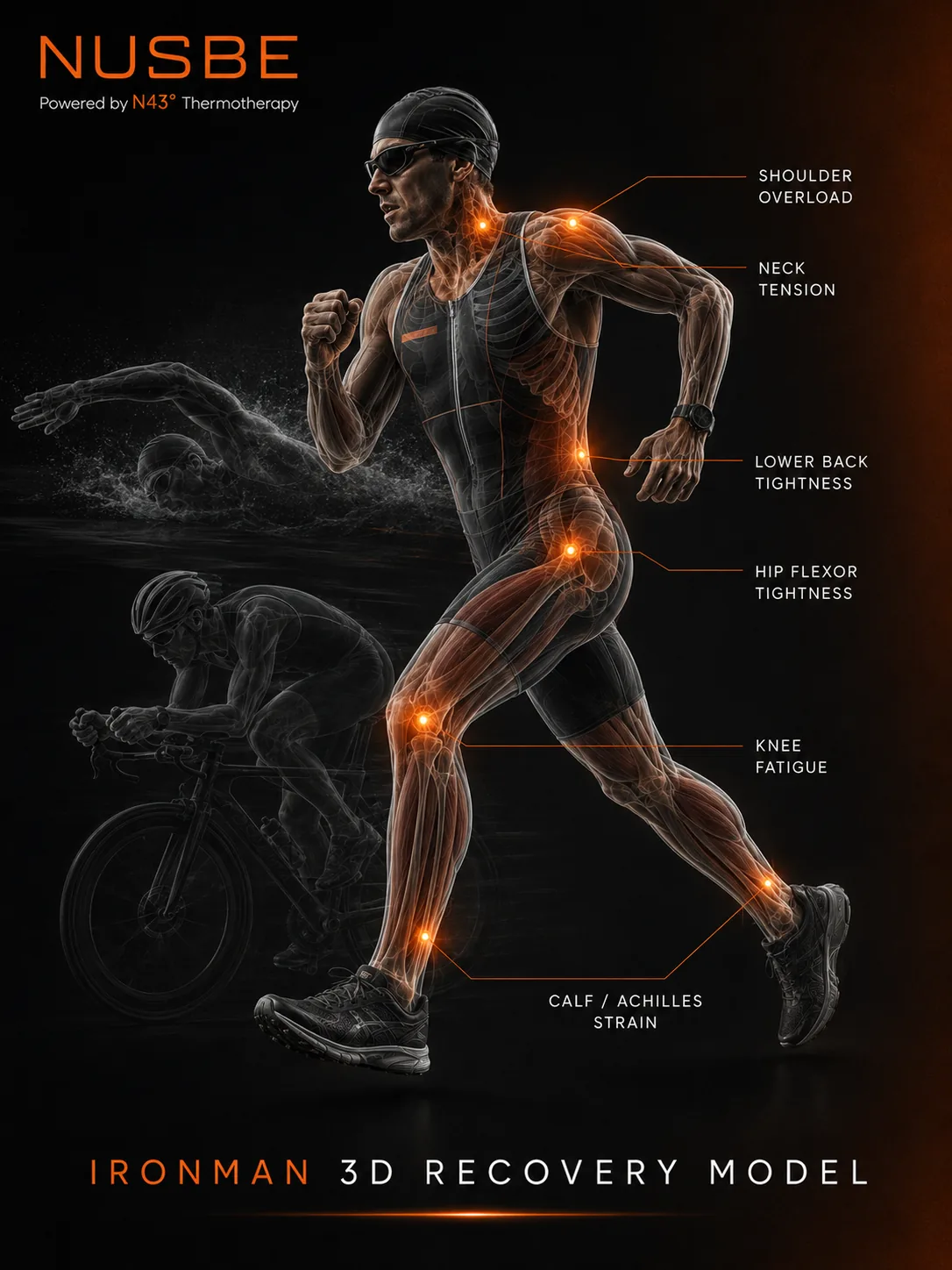
Recovery is part of the plan, not an afterthought
Most age-group triathletes treat training as the plan and recovery as whatever is left over. With six to ten sessions a week, that ordering does not survive contact with a real training block.
The structural decisions matter far more than anything you do after a session:
1. Are the easy sessions actually easy? 2. Is there one genuinely light or off day each week? 3. Is sleep protected, or is it what gets cut for the 5am swim? 4. Is there a lighter week every third or fourth?
If those four are wrong, no amount of post-session routine compensates.
The middle-intensity trap
The single most common error in age-group triathlon is training everything at a moderate effort — too hard to recover from properly, too easy to drive much adaptation.
Easy sessions being genuinely easy is what makes the hard sessions possible. It is also what stops soreness from becoming permanent background noise.
Signals worth acting on
- Soreness that no longer clears between sessions.
- Easy paces or power feeling unusually hard.
- Sleep disturbed despite being tired.
- Losing interest in sessions you normally look forward to.
- Discomfort returning to exactly the same place every week.
The first four usually mean load. The fifth deserves a qualified healthcare professional's opinion rather than another block of training around it.
Where warmth fits
Between sessions, on the areas that keep recurring — most often quads, calves, lower back and shoulders. With no acute swelling, controlled warmth may help ease stiffness and make the next session feel less guarded.
Applied within about an hour of finishing, research on post-exercise soreness suggests it may reduce how sore you feel the next day.
Where NUSBE fits
A guided NUSBE session applies controlled, comfortable warmth to the areas you choose at a consistent temperature and coverage every time. Triathletes commonly schedule it on their heaviest training day of the week.
This is recovery and comfort support. It is not treatment, and it does not replace care from a qualified healthcare professional.
Frequently asked questions
How do I know if I am overreaching?
Common signals are soreness that no longer clears between sessions, easy paces feeling hard, disturbed sleep, and losing motivation for sessions you normally enjoy. Any of these persisting for more than a week or two is worth acting on.
Should I take a full rest day?
Most age-group triathletes do better with at least one genuinely easy or fully off day per week. Filling every day with something is the most common reason a training block stops producing progress.
How often should I have a down week?
A common workable pattern is a lighter week every third or fourth week. The exact rhythm is individual and a coach can shape it around your race calendar.
Where does warmth fit in a heavy block?
As comfort support between sessions. With no acute swelling, controlled warmth may help ease stiffness in the areas that keep recurring. It supports how you feel; it does not replace load management.
Evidence referenced in this guide
- Wang Y et al., Physical Therapy in Sport 2021 — meta-analysis of 32 randomised trials on heat and cold for post-exercise muscle soreness.
- Network meta-analysis of cold and heat therapies for DOMS, 2022 — hot packs ranked highest for early soreness relief.
See the research behind our recovery claims on the science page.