
Recovering after a long-distance triathlon
After a long-distance triathlon, the first priority is rehydrating and eating, then several days of genuinely easy movement rather than rest or training. Most athletes need one to three weeks before structured training feels right again. Persistent pain, swelling, or feeling unwell after a race deserves medical attention rather than patience.
The first evening
A long-distance race is not comparable to any training day, and the hours after finishing matter more than anything you do in the following week.
- Rehydrate steadily rather than all at once. In Malaysian heat, fluid loss over a full race day is substantial. - Eat, even without appetite. Something is better than waiting until you feel like it. - Keep moving gently before you sit down for the evening. - Warmth on stiff quads and calves once there is no acute swelling.
The first week
| Day | What it looks like |
|---|---|
| 1–2 | Walking only; eat and sleep properly |
| 3–4 | Very easy swim or spin if you feel like it |
| 5–7 | Easy movement, still nothing structured |
Notice what is absent: a plan. The first week after a long race is not the place for one, and athletes who rebuild structure immediately are the ones who spend the following month flat.
Coming back
Most age-group athletes need one to three weeks before structured training feels right again, and longer if the race was in heat. Let motivation return on its own — it is a reasonable signal, and chasing it before it arrives rarely works.
When it is medical, not recovery
Please seek medical attention if you feel genuinely unwell rather than tired, if you have persistent swelling, very dark urine, ongoing dizziness, or a fever, or if pain is sharp and localised rather than a general ache.
Post-race is one of the few times where "wait and see" is the wrong instinct.
Where NUSBE fits
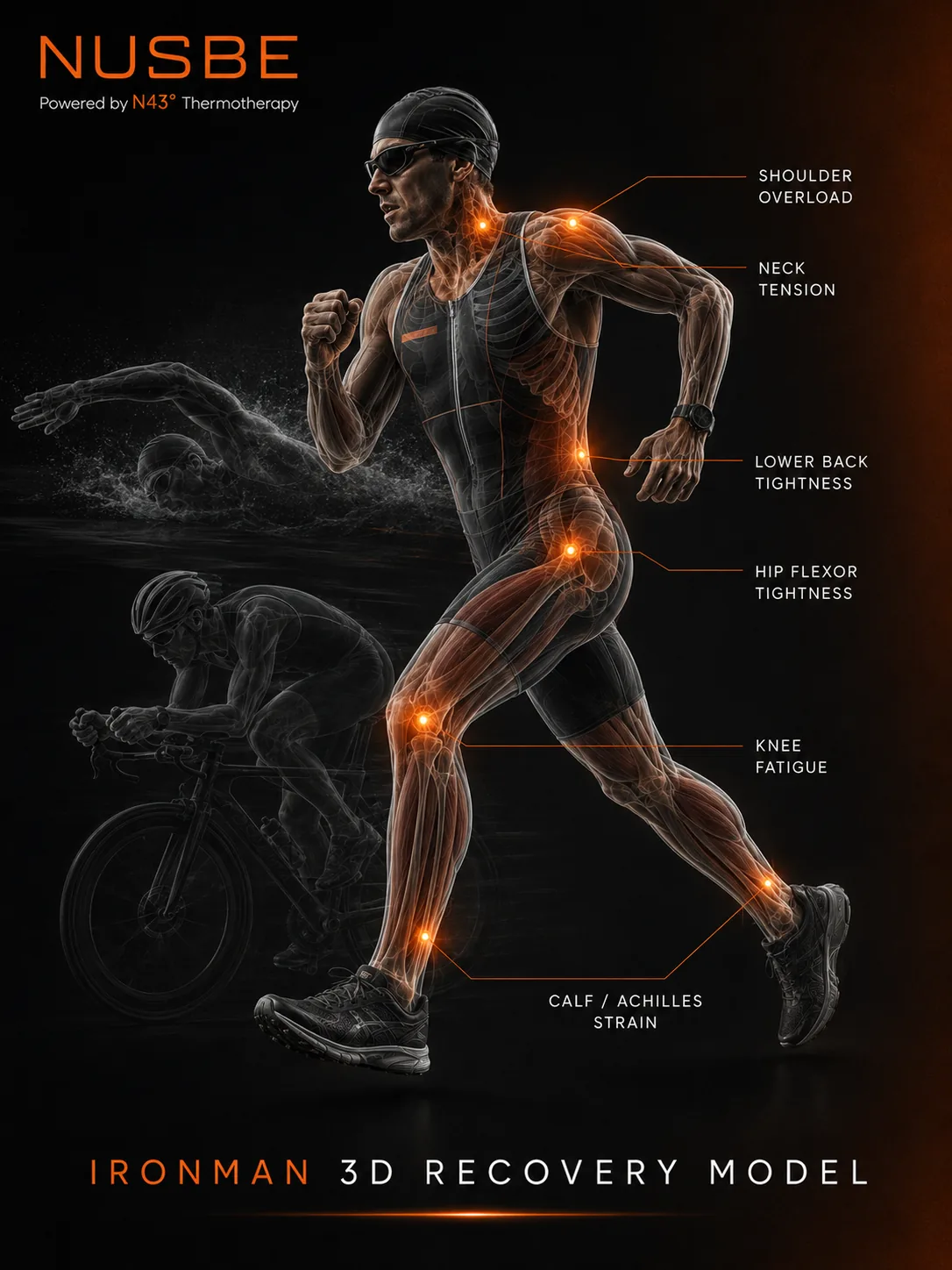
A guided NUSBE session applies controlled, comfortable warmth to the quads, calves, lower back and shoulders at a consistent temperature and coverage. Athletes commonly book it in the days after a race, when the aim is simply to feel less stiff.
This is recovery and comfort support. It is not treatment, and it does not replace care from a qualified healthcare professional.
Frequently asked questions
How long should I take off after a long-distance race?
Most age-group athletes do well with several days of easy movement only, then one to three weeks of unstructured training before returning to a plan. Returning to structure too fast is the most common post-race mistake.
Should I rest completely?
Complete rest tends to leave you stiffer. Gentle walking or very easy swimming in the days after a race generally feels better than doing nothing at all.
Why do I feel worse two days after the race than the day after?
Delayed soreness commonly peaks around 24 to 48 hours, and after a long race the peak can be later still. Feeling worse before better is a normal pattern.
When should I see a doctor after a race?
If you feel unwell rather than just tired, if you have persistent swelling, very dark urine, ongoing dizziness, or pain that is sharp and localised, please seek medical attention rather than waiting it out.
Evidence referenced in this guide
- Wang Y et al., Physical Therapy in Sport 2021 — meta-analysis of 32 randomised trials on heat and cold for post-exercise muscle soreness.
- Network meta-analysis of cold and heat therapies for DOMS, 2022 — hot packs ranked highest for early soreness relief.
See the research behind our recovery claims on the science page.