
Why you're sore after basketball, and how long it lasts
Basketball soreness comes from jumping, landing and repeated cutting, so it lands in the knees, calves, ankles and lower back. For most players it peaks a day or two after playing and settles within a few days. Easy movement, sensible spacing of court sessions and warmth on stiff areas are the practical basics.
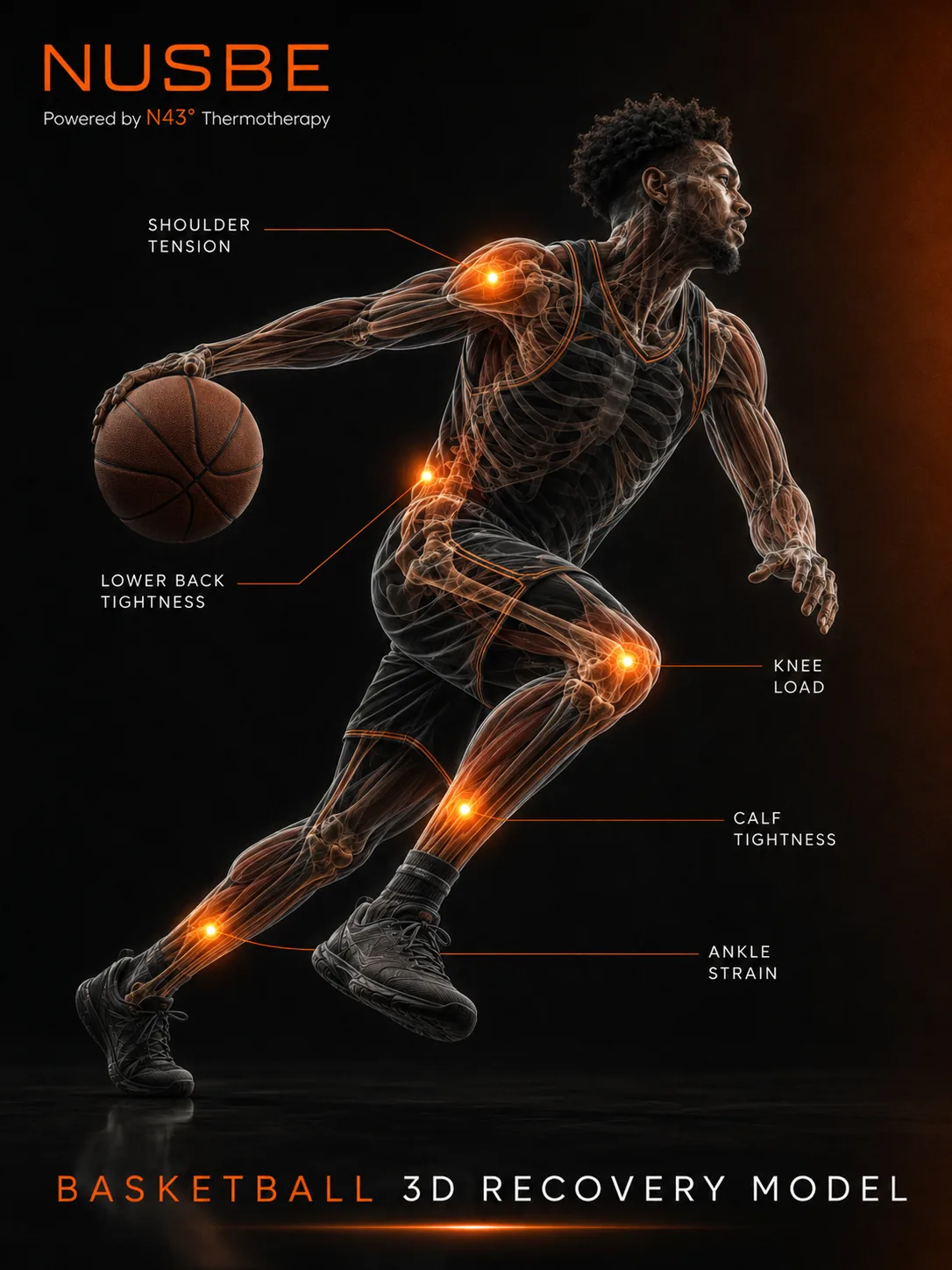
Jump, land, cut, repeat
Basketball is one of the most repetitive high-force sports there is. Every possession involves some combination of jumping, landing, stopping and changing direction — and all four are high-load events for the lower body.
Across a full game that adds up fast.
- Calves and knees produce the jump and then absorb the landing.
- Ankles take the cutting, pivoting and the occasional awkward landing.
- Lower back stabilises through drives, contact and rebounds.
- Shoulders accumulate from shooting volume and contact.
Soreness across these areas after a hard game is a normal training response.
How long it usually lasts
| What you feel | What it usually means |
|---|---|
| Calf and quad heaviness, worse the next morning | Typical game soreness |
| General ankle and knee stiffness that eases with movement | Typical |
| Sharp knee pain during jumping or landing | Worth professional assessment |
| Ankle swelling after a roll, or instability | See a healthcare professional |
That last row is the one to respect. Ankle rolls are the most common basketball complaint there is, and playing on one that swelled is how a short problem becomes a recurring one.
What actually helps
- Cool down before you leave the court. A few minutes of easy movement is worth more than it feels. - Space heavy court sessions. Playing several nights in a row is the most common cause of leg soreness that never clears. - Build court volume gradually, especially returning after a break. - Warmth for stiffness. With no acute swelling, controlled warmth may help ease stiffness in the calves, quads and lower back before your next game. - Protect sleep, particularly after late-night games.
Where NUSBE fits
A guided NUSBE session applies controlled, comfortable warmth to the areas you choose — commonly calves, quads, knees and lower back after a heavy week — at the same temperature and coverage every time.
This is recovery and comfort support. It is not treatment, and it does not replace care from a qualified healthcare professional.
Frequently asked questions
How long should soreness last after basketball?
For most players it peaks around 24 to 48 hours after playing and eases within a few days. Soreness that is sharp, does not settle after several days, or comes with swelling deserves assessment by a healthcare professional.
Why are my calves and knees the sorest?
Every jump is produced through the calves and knees, and every landing sends that force back through them. A single game involves dozens of both, which is why the lower legs usually complain first.
Is ankle soreness normal after playing?
General stiffness after a hard game is common. Swelling, instability, or pain after a specific roll of the ankle is different and should be assessed by a healthcare professional before you play again.
Does warmth help after basketball?
Once there is no acute swelling, warmth may help ease stiffness. Research on post-exercise soreness found heat applied within about an hour of finishing may reduce how sore you feel the next day.
Evidence referenced in this guide
- Wang Y et al., Physical Therapy in Sport 2021 — meta-analysis of 32 randomised trials on heat and cold for post-exercise muscle soreness.
- Network meta-analysis of cold and heat therapies for DOMS, 2022 — hot packs ranked highest for early soreness relief.
See the research behind our recovery claims on the science page.