
Hamstring tightness after football, and what helps
The hamstring works hardest in football during sprinting, where it controls the lower leg at speed rather than simply driving it. General tightness after a match is common and usually settles in a few days. A sudden sharp pull felt mid-sprint is a different thing and should be assessed by a healthcare professional before you play again.
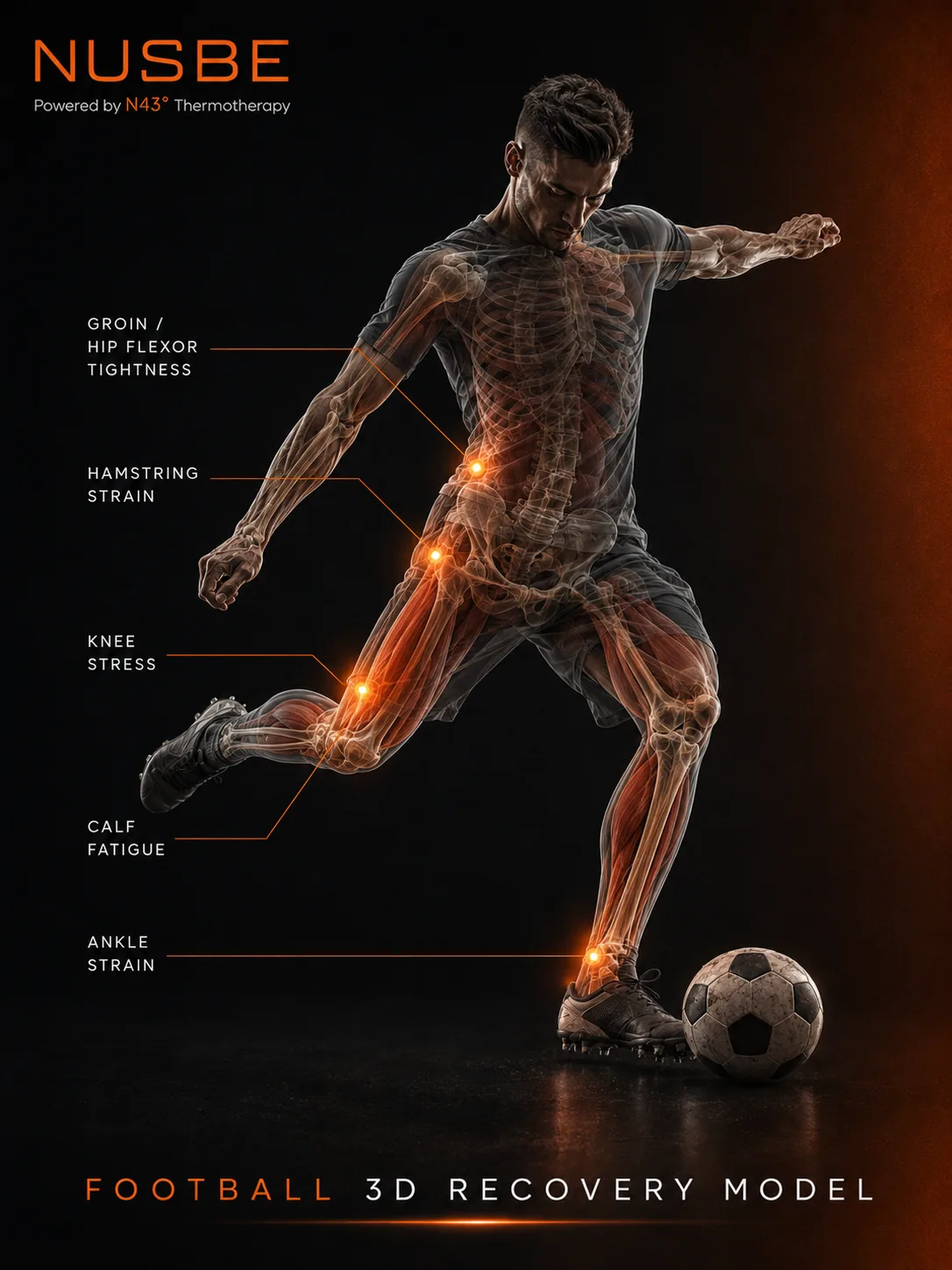
Why sprinting is the demanding part
Most players assume the hamstring works hardest when driving the leg backwards. In football the harder job is the opposite one: at top speed, the hamstring has to slow the lower leg down before the foot lands, stride after stride.
That controlling work is what leaves the back of the thigh feeling tight the next day — and it is why hamstring complaints cluster around matches with a lot of sprinting rather than matches with a lot of jogging.
Two patterns make it more likely:
- A sudden jump in sprinting. Coming back from a break, or a first competitive match after pre-season, is the classic setup. - Fatigue late in a game. Most players notice it in the last twenty minutes, when control drops off.
Tightness, or something sharper?
| What you notice | Usual reading |
|---|---|
| Broad tightness across the back of the thigh | Typical match soreness |
| Eases as you warm up and move | Typical |
| Sudden sharp pull felt during a sprint | Stop, and get it assessed |
| Tender at one specific point, bruising, limping | See a healthcare professional |
This distinction matters more in football than in most sports. Playing through a sharp hamstring sensation is how a short problem becomes a long one, and no amount of warmth or stretching substitutes for having it looked at.
What supports recovery
- Easy movement the day after. Walking and light spinning usually feel better than complete rest. - Build sprint exposure gradually. Regular short exposure to near-maximum running is more protective than avoiding sprinting entirely and then doing it all in one match. - Strength work over time. Progressive hamstring strengthening is well supported for players; a coach or professional can guide something suitable. - Warmth for general tightness. With no acute swelling, controlled warmth may help ease stiffness and make the area feel less guarded before your next session. - Respect the late-game window. If tightness arrives in the last twenty minutes, that is information worth acting on.
Where NUSBE fits
A guided NUSBE session applies controlled, comfortable warmth to the hamstrings and surrounding areas at a consistent temperature and coverage. Players often use it between a match and the next session, when the aim is simply to feel less tight going into training.
This is recovery and comfort support. If you felt anything sharp, please see a qualified healthcare professional before your next match.
Frequently asked questions
Why do hamstrings tighten after football specifically?
Sprinting asks the hamstring to slow the lower leg down at high speed, repeatedly. That eccentric work is demanding, and it is why hamstrings are often the first area players notice after a match with a lot of running.
How do I tell tightness from something more serious?
General tightness is spread across the back of the thigh and eases as you warm up. A sudden sharp pull during a sprint, tenderness at one specific point, bruising, or difficulty walking are different, and are worth prompt professional assessment.
Should I stretch a tight hamstring after a game?
Gentle movement and easy range work are usually comfortable. Aggressive stretching into pain is not helpful, particularly if you felt anything sharp during the match.
Can warmth help hamstring tightness?
With no acute swelling or sharp pain, warmth may help ease general stiffness and make the area feel less guarded before your next session. It supports comfort, not repair.
Evidence referenced in this guide
- Wang Y et al., Physical Therapy in Sport 2021 — meta-analysis of 32 randomised trials on heat and cold for post-exercise muscle soreness.
- Network meta-analysis of cold and heat therapies for DOMS, 2022 — hot packs ranked highest for early soreness relief.
See the research behind our recovery claims on the science page.