
Groin and hip flexor tightness in footballers
Groin and hip flexor tightness in football comes from kicking, side-stepping and turning — movements that pull repeatedly through the front and inside of the hip. General tightness usually settles with easy movement and spacing of hard sessions. Groin pain that persists week to week is a recognised issue in football and deserves professional assessment.
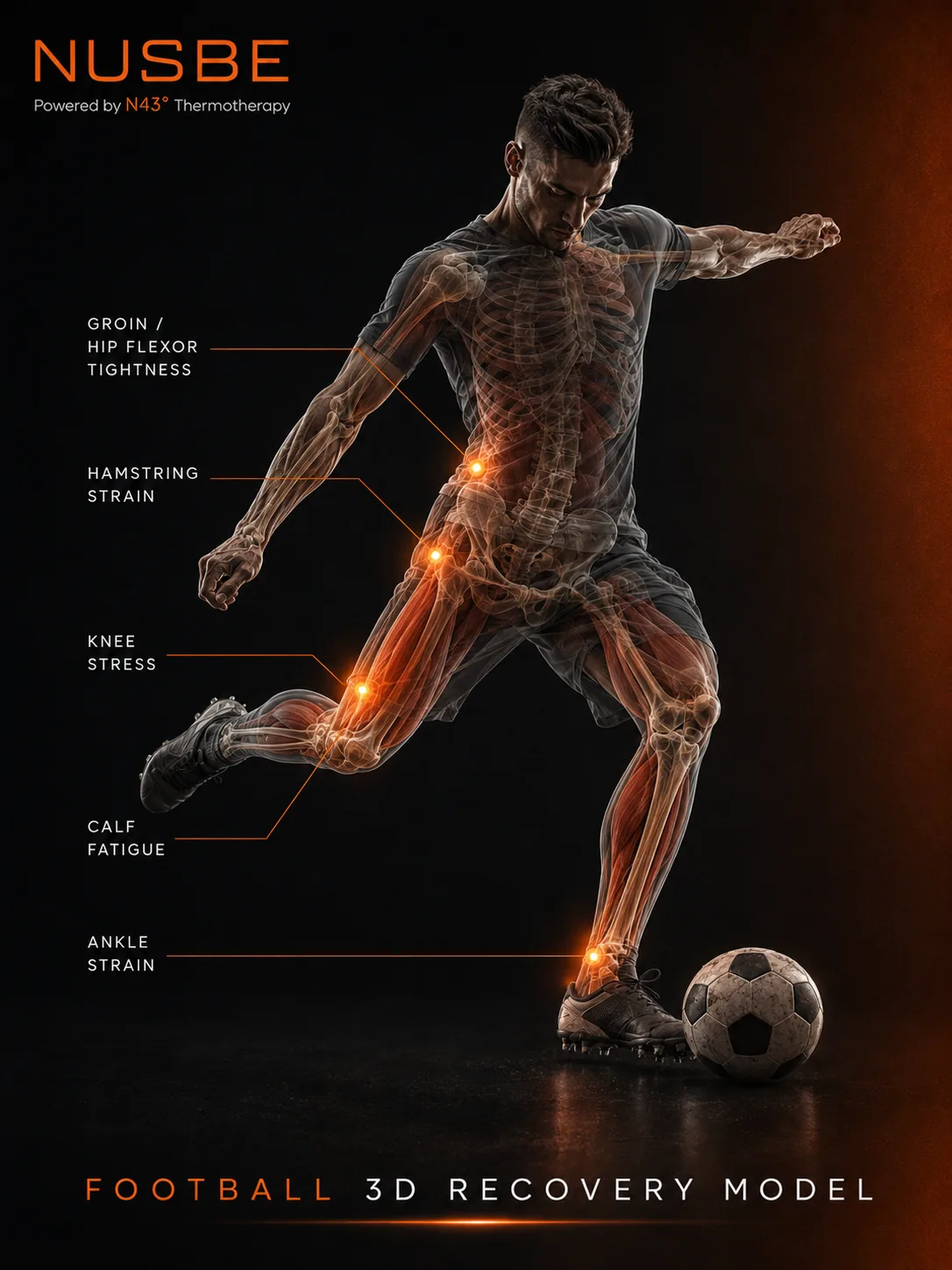
Three movements, one area
Football is unusual in how often it combines three demanding patterns for the same region:
1. Kicking — a fast swing that both pulls and then decelerates the leg. 2. Side-stepping and cutting — loading the inside of the hip laterally. 3. Lunging or stretching for the ball — often at full range, often unplanned.
All three pull through the groin and hip flexors. Repeat them across ninety minutes and the front of the hip is doing more work than almost anywhere else in the body.
What tends to make it worse
- Playing on a hard or uneven surface, where direction changes bite more. - Coming back after a break without rebuilding kicking and cutting volume. - Prolonged sitting between matches, which leaves the hip flexors short before you even start. - Doing all your kicking on one side, which is most players.
That third one is worth noting if you work at a desk during the week and play at the weekend. It is a very common Malaysian pattern, and it means the hip starts the match already tight.
What actually helps
- Warm the hip up properly before kicking hard, rather than using the first ten minutes of the match as the warm-up. - Build kicking and cutting volume gradually after any break. - Move during the week. If you sit for long stretches, regular movement breaks make a genuine difference to how the hip feels on match day. - Warmth for general tightness. With no acute swelling, controlled warmth may help ease stiffness around the hip and groin between sessions. - Get persistent groin pain assessed. Ongoing groin pain is a recognised and well-studied problem in football, with established care pathways. It is not something to keep playing through.
Where NUSBE fits
A guided NUSBE session applies controlled, comfortable warmth to the hip and surrounding areas at a consistent temperature and coverage. Players commonly pair it with the lower back and hamstrings after a heavy match week.
This is recovery and comfort support. It is not a medical assessment, and it does not replace care from a qualified healthcare professional.
Frequently asked questions
Why is groin tightness so common in football?
Kicking, changing direction and lunging for the ball all load the muscles on the inside and front of the hip. Few other sports combine those three patterns as often, which is why footballers report it more than most athletes.
Is groin tightness the same as a groin strain?
No. General tightness is broad and eases with movement. A strain usually involves a sharper sensation at a specific point, often felt during a kick or stretch for the ball, and should be assessed by a healthcare professional.
How long should it take to settle?
General post-match tightness usually eases within a few days. Groin discomfort that lingers week after week is a well-recognised pattern in football and is worth getting looked at rather than managing alone.
Does warmth help groin and hip tightness?
With no acute swelling or sharp pain, warmth may help ease general stiffness around the hip and make movement feel easier before your next session.
Evidence referenced in this guide
- Wang Y et al., Physical Therapy in Sport 2021 — meta-analysis of 32 randomised trials on heat and cold for post-exercise muscle soreness.
- Network meta-analysis of cold and heat therapies for DOMS, 2022 — hot packs ranked highest for early soreness relief.
See the research behind our recovery claims on the science page.