
Badminton knee and lunge load, explained
The lunge to the net asks the front knee and quad to absorb body weight and then push back out, dozens of times per game. That is why legs feel heavy after badminton despite the small court. Gradual build-up, spacing sessions and warmth on stiff areas help. Knee pain that swells or gives way needs professional assessment.
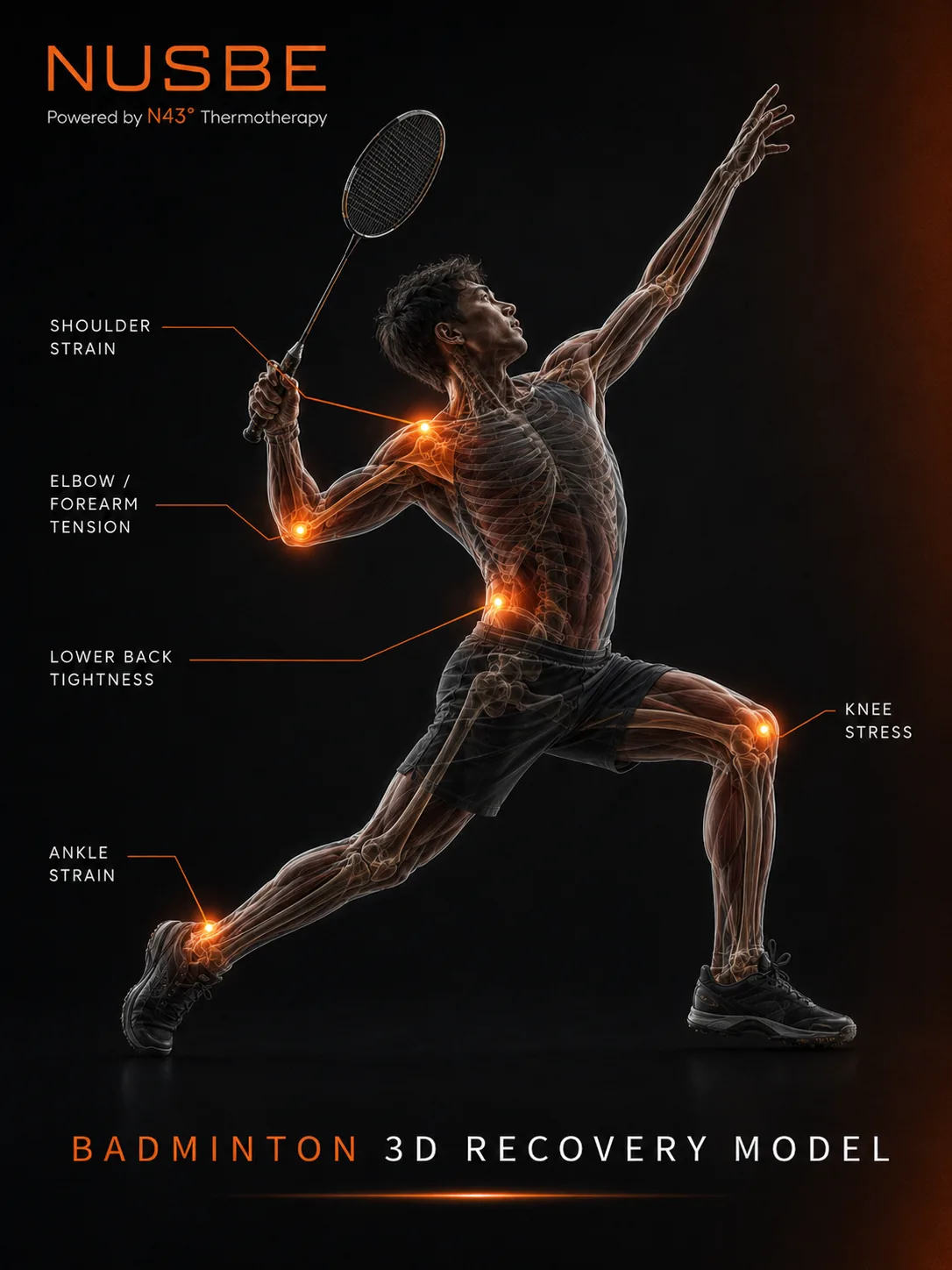
The lunge is the whole story
Watch a rally and count the lunges. A single point at the net can involve three or four, and each one asks the same thing: drop into a deep position under control, absorb body weight through the front knee and quad, then push back out to the centre.
Repeat that across a session and the legs have done a great deal of work, even though you never ran more than a few metres at a time.
This is why players are often surprised by how sore their quads are the next day. The court is small; the workload is not.
What loads what
| Movement | Where it lands |
|---|---|
| Lunge to the net | Front knee, quad |
| Push back to centre | Quad, glute, calf |
| Split-step | Calf, ankle |
| Deep defensive reach | Quad, hip, lower back |
What supports recovery
- Build playing hours gradually. Going from one session a week to four is the most common cause of leg soreness that never clears. - Warm up the legs before playing, especially if you came straight from a desk. - Easy movement the day after rather than complete rest. - Warmth for stiffness. With no acute swelling, controlled warmth may help ease stiffness in the quads and around the knee before your next session. - Strength work over time. Gradual leg strengthening supports the knee across a season; a professional can guide something suitable.
When to stop self-managing
See a qualified healthcare professional if the knee swells, gives way, locks, or hurts at rest or at night. Those patterns are different from ordinary post-session stiffness, and they deserve assessment rather than another week of playing through.
Where NUSBE fits
A guided NUSBE session applies controlled, comfortable warmth to the quads, knees and surrounding areas at a consistent temperature and coverage. Players often book it the day after their heaviest session.
This is recovery and comfort support. It is not a medical assessment, and it does not replace care from a qualified healthcare professional.
Frequently asked questions
Why do my knees feel it after badminton but not after jogging?
Jogging is repetitive and predictable. Badminton is dozens of deep lunges and sharp stops, where the knee absorbs body weight quickly and from changing angles. That is a very different demand.
Is quad soreness after badminton normal?
Yes. The quads control the lunge on the way down and drive the recovery step back, so general quad soreness after a hard session is expected, particularly if you played longer than usual.
When should I get knee pain looked at?
If the knee swells, gives way, locks, or hurts at rest or at night, see a healthcare professional. General stiffness that eases as you warm up is a different thing.
What helps between sessions?
Easy movement rather than complete rest, sensible spacing of hard sessions, gradual increases in playing hours, and warmth on areas that stay stiff once any swelling has settled.
Evidence referenced in this guide
- Wang Y et al., Physical Therapy in Sport 2021 — meta-analysis of 32 randomised trials on heat and cold for post-exercise muscle soreness.
- Network meta-analysis of cold and heat therapies for DOMS, 2022 — hot packs ranked highest for early soreness relief.
See the research behind our recovery claims on the science page.